
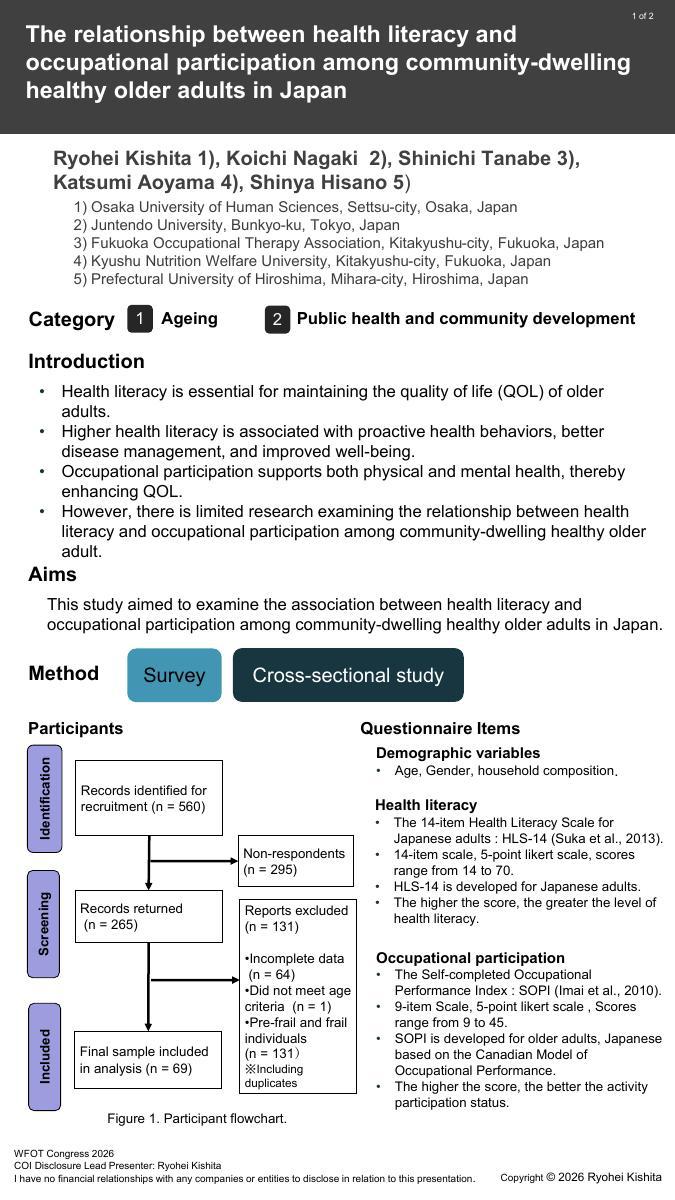
Introduction: Health literacy is essential for maintaining the quality of life (QOL) of older adults. Higher health literacy is associated with proactive health behaviors, better disease management, and improved well-being. Occupational participation supports both physical and mental health, thereby enhancing QOL. However, there is limited research examining the relationship between health literacy and occupational participation among community-dwelling healthy older adults.
Aims: This study aimed to examine the association between health literacy and occupational participation among community-dwelling healthy older adults in Japan.
Methods: Sixty-nine community-dwelling older adults not certified for long-term care (20 men; mean age: 74.7 ± 5.3 years) from Kyushu, Japan, participated. Health literacy was assessed using the 14-item Health Literacy Scale for Japanese Adults (HLS-14), while occupational participation was measured using the Self-completed Occupational Performance Index (SOPI). Both instruments have been shown to be reliable and valid for use with Japanese older adults. Demographic data, including age, gender, and household composition, were also collected. Multiple regression analysis (forced entry method, p < 0.05) was performed, with SOPI as the dependent variable and HLS-14 scores and demographic factors as independent variables. The study was approved by the Research Ethics Committee.
Results: HLS-14 scores were significantly positively associated with SOPI (β = 0.390, p < 0.001). In contrast, demographic factors did not show a significant association with SOPI (p > 0.05).
Conclusion: These findings highlight the importance of health literacy in promoting occupational participation. Enhancing health literacy may encourage engagement in meaningful activities, supporting active aging. Future initiatives should integrate health literacy education with occupational participation programs to foster social engagement and independence.