
Introduction / Rationale: Research indicates the value of inclusive teaching and learning strategies to promote student learning, support minoritized students, minimize imposter syndrome, and spur professional success for students (Addy, et. al 2021). A variety of teaching and learning strategies are used in higher education classrooms. Although these strategies are used, not all are considered inclusive or promote student learning and belonging in the classroom.
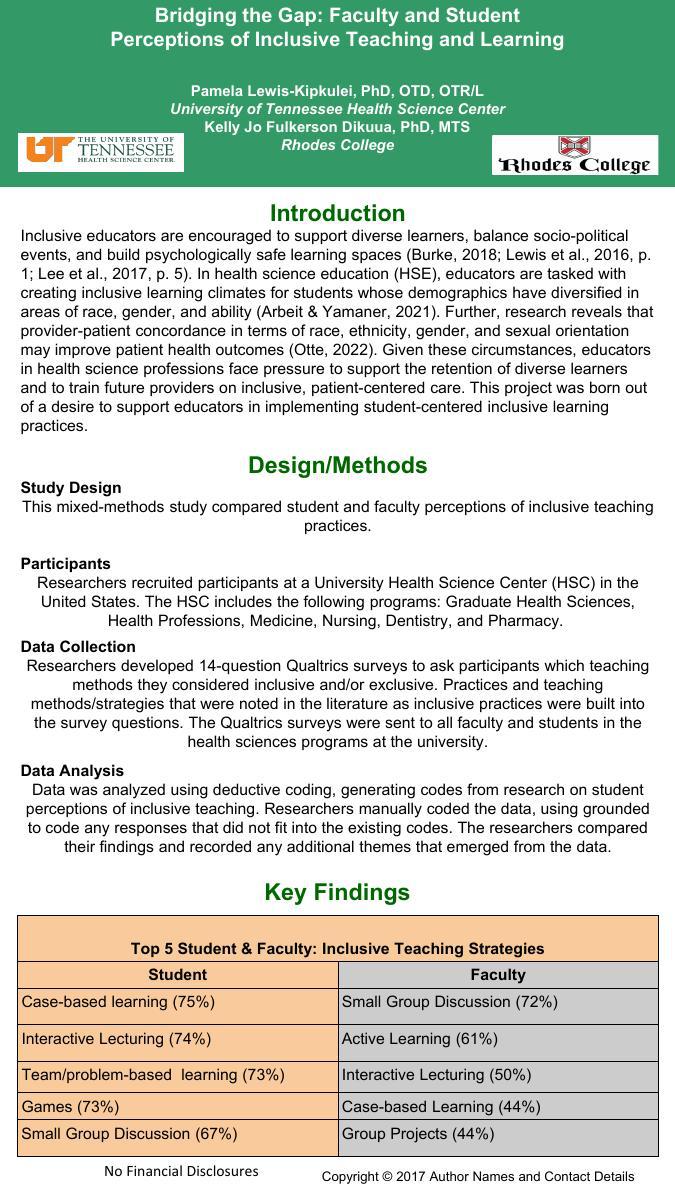
Objectives: This study aimed to identify practices students see as inclusive and exclusionary in learning spaces, and to describe any mismatches in perceptions of inclusive teaching and learning strategies among students and faculty. Researchers sought to determine how perceptions of inclusivity align between students and faculty.
Methods / Approach: This study used a qualitative, descriptive approach to explore differences in student and faculty perspectives on inclusivity in the classroom.
Results / Practice Implications: Researchers compared the top five inclusive teaching and climate-building strategies identified by students and faculty. Findings indicate that although these perceptions align, students continue to feel excluded and faculty struggle with how to support learners beyond using inclusive teaching strategies. Implications for practice indicate that beyond utilizing inclusive strategies, instructors should facilitate a classroom culture of grace that recognizes the humanity in instructors and students by recognizing personal biases, setting clear expectations, using affirming communication, using interactive teaching methods, getting to know students as people, and providing formative feedback.
Conclusion / Contribution to the occupational therapy profession: By facilitating a culture of grace, instructors should be mindful of why each person is there and work towards helping them achieve their goals. This grace will help produce inclusive occupational therapy professionals who can interact with people from all walks of life.