
Rationale: Occupational therapy educators encounter role conflicts due to divergent professional and educational demands. Addressing these conflicts is essential for effective pedagogy and practitioner development. The increasing complexity of educational roles in healthcare requires innovative solutions to maintain high standards of teaching and ensure positive student outcomes.
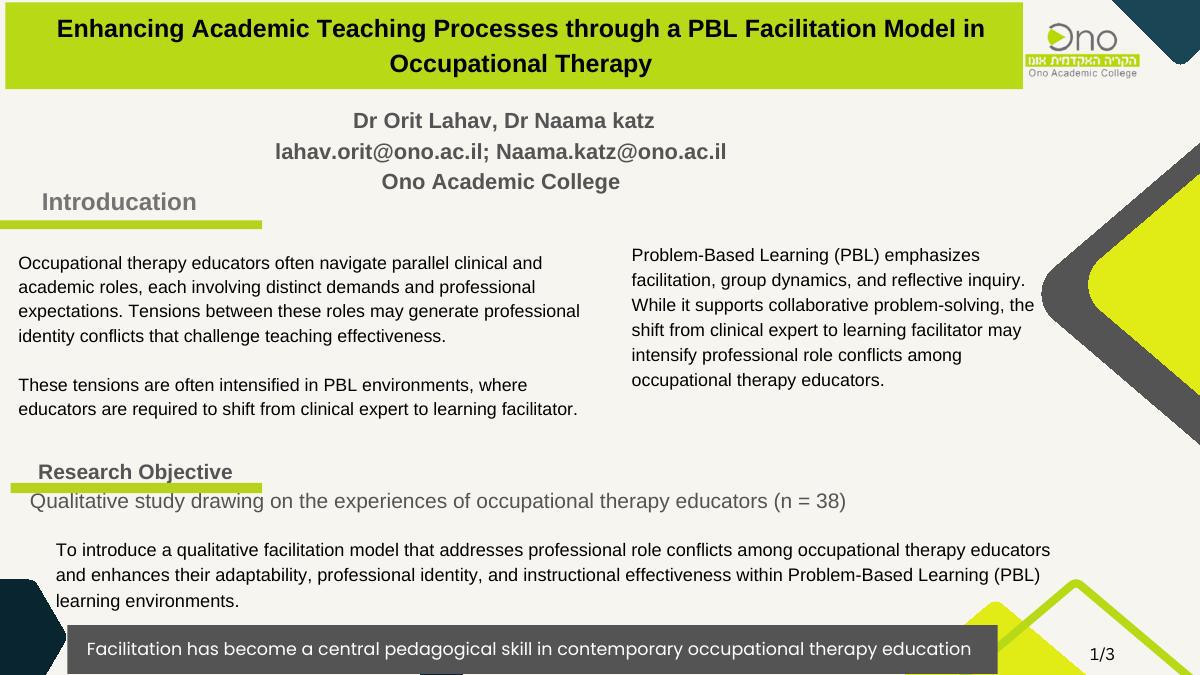
Objectives: To introduce a model addressing role conflicts among occupational therapy educators, enhancing their ability to effectively facilitate learning with Problem-Based Learning (PBL) principles.
Methods: The study engaged 35 occupational therapy educators using a reflective questionnaire over two years to investigate the challenges faced in facilitating learning groups and the effectiveness of employed strategies. This comprehensive approach provided a deep understanding of the interplay between educator roles and educational outcomes.
Results: Results indicated that the model allowed educators to adopt coping mechanisms aligning with PBL goals, thereby enhancing flexibility and instructional effectiveness. Educators successfully adapted to optimal teaching methods, reinforcing PBL's application in educational settings. The model proved crucial in navigating the complexities of academic roles, offering a strategic framework for continuous professional development.
Contribution to the Occupational Therapy Profession: The study highlights the significance of professional identity in resolving role conflicts and improving educational outcomes. The model significantly contributes to the occupational therapy field by optimizing teaching effectiveness and aligning educator actions with PBL objectives, ultimately enhancing educator competency and adaptability. This research paves the way for future innovations in occupational therapy education, promoting a more adaptive and responsive educational environment.