
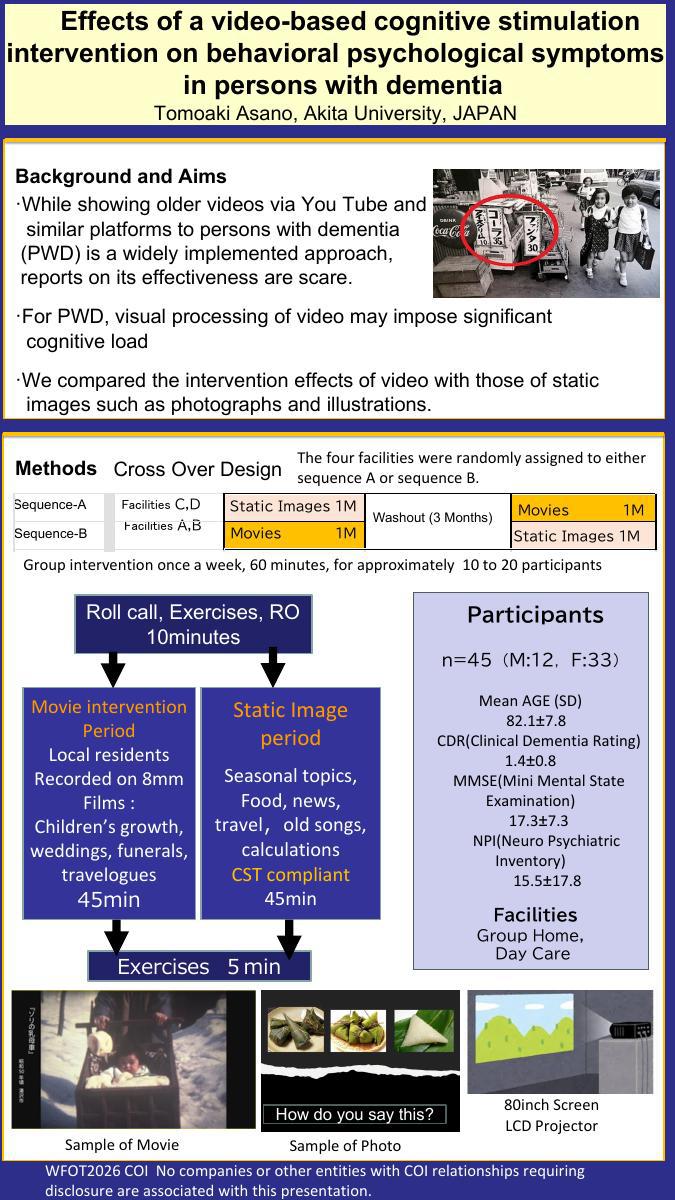
Introduction: Efforts to show old videos to people with dementia (PWD) via YouTube and other media are widespread, but there are few reports on their effectiveness. Cognitive Stimulation Therapy (CST) has been shown to improve social functioning in mild to moderate PWD. Our previous study deviated from the CST protocol, using a large screen with photos instead of real objects, and found similar effects to the original CST.
Objectives: This study examined the effects of video-based versus photo-based slide interventions on behavioral psychological symptoms (BPSD) of PWD.
Methods: The study used a crossover design with the same subjects during both intervention periods, with a three-month washout. During the video intervention period, subjects viewed black-and-white 8mm films taken approximately 60 years ago, depicting children's growth records, weddings, funerals, and travel scenes. Several short videos, each under 10 minutes, were viewed at a time. During the slide period, pictures of seasonal topics, food, festivals, celebrities, songs, and sightseeing spots were used. Both interventions were conducted once a week for 60 minutes, totaling five sessions. A linear mixed model in EZR was used for statistical analysis. This study was approved by the ethics committee of the organization the first presenter belongs to.
Results: The results indicated that BPSD scores and caregiver burden improved significantly only during the photo-based slide intervention period. There were no significant improvements in apathy, verbal fluency, depression, or cognitive function in either period.
Conclusion: These findings suggest that when using video images as cognitive stimuli, adjustments in colorization, high image quality, and playback speed may be necessary to match subjects' cognitive function.