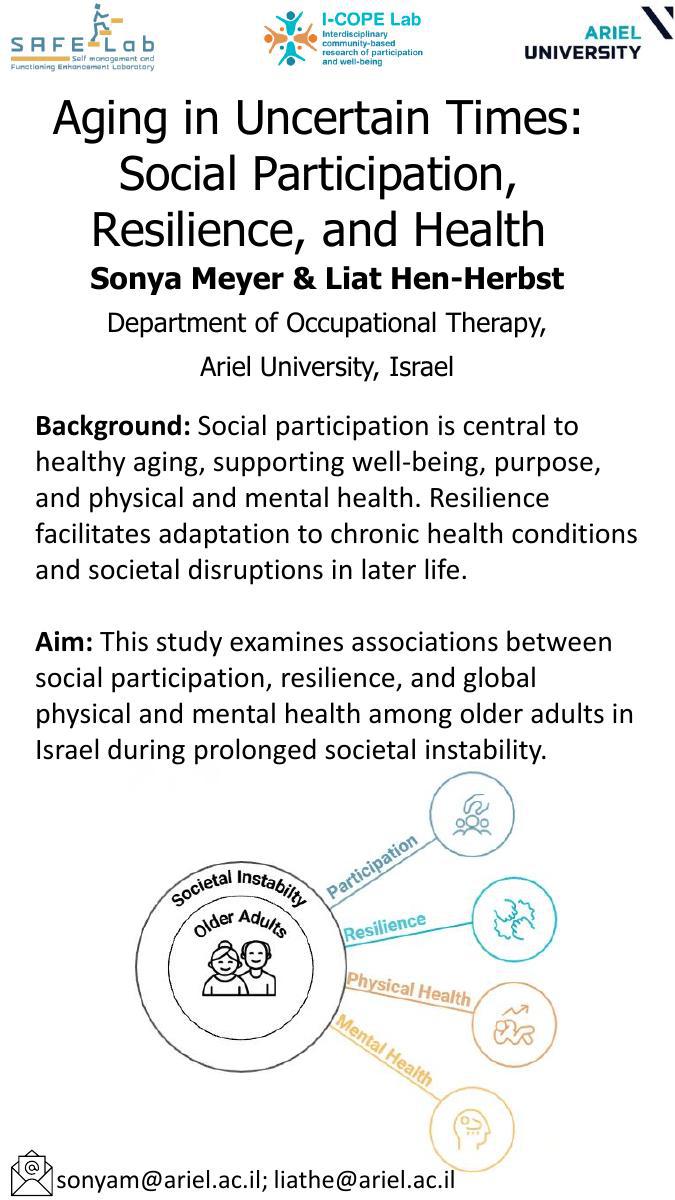
Introduction: Social participation plays a crucial role in aging, contributing to health, well-being, and a sense of purpose while mitigating negative psychological effects. Active engagement in social networks and community activities has been linked to better physical and mental health outcomes in older adults. Resilience, the ability to adapt to adversity and maintain stability, is particularly relevant in aging populations facing chronic health conditions and societal disruptions.
Objectives: This study aimed to examine the relationships between social participation, resilience, and global health (physical and mental) among older adults in Israel during a period of prolonged societal instability.
Methods: A cross-sectional study was conducted with 504 Israeli adults (54.4% female) aged 65 and older (Mage = 72.5). Participants completed an online survey including the Australian Community Participation Assessment Questionnaire (ACPQ), the Connor-Davidson Resilience Scale (CD-RISC-10), and the Global Health questionnaire (PROMIS-10). Data collection occurred during an extended period of societal challenges, allowing for real-time assessment.
Results: Significant positive correlations were found between resilience and global physical (r = .290, p < .001) and mental (r = .491, p < .001) health. Social participation was also positively associated with global mental health (r = .308, p < .001) and resilience (r = .322, p < .001), suggesting that individuals with greater social engagement reported better mental health and resilience.
Conclusion: The findings emphasize the crucial role of social participation in maintaining resilience and promoting global health in older adults. Strengthening social networks and fostering resilience-enhancing occupational-based interventions, can support well-being, particularly during challenging times.
