
Introduction: Video gaming on mobile technology (tablets and smartphones) is a multi-billion dollar industry that people of all ages participate in. While there are general training resources for mobile technology and console-based gaming, a completed literature review revealed a lack of resources for mobile video gaming, especially for those with disabilities, which results in limited resources for OTs to support their clients.
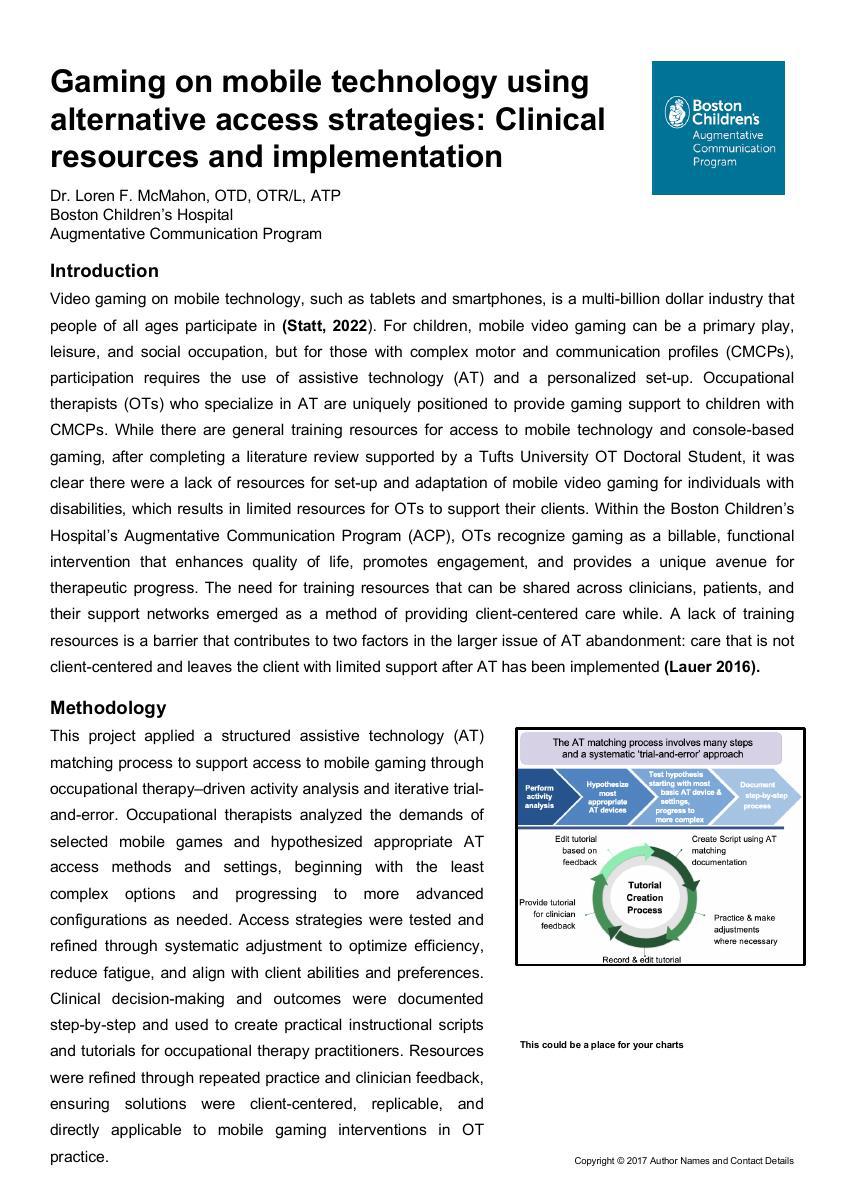
Objectives: To address the gap in research and augment the current gaming resources available, OTs within the Boston Children’s Hospital Augmentative Communication Program created multi-modal resources, including: (1) Creating video tutorials demonstrating the set-up and use of alternative access devices in mobile games; (2) Developing a printable resource with game recommendations based on assistive devices; (3) Disseminating videos on a free public platform (YouTube); and (4) Providing clients with occupational engagement and greater quality of life.
Approach: Education provided through written and audiovisual methods will support patients, caregivers, and community stakeholders in supporting mobile gaming as an occupation for patients across the lifespan.
Implications: A lack of training resources results in AT abandonment and care that is not client-centered, leaving the client with limited support. AT is an ever-evolving field and necessitates practitioners remain up-to-date with the latest trends and evidence-based practice.
Conclusion: Mobile video gaming can be a primary play, leisure, and social occupation, but for those with complex motor and communication profiles, participation requires using AT and personalized set-up. OTs outside the BCH network will become familiar with mobile technology gaming resources for continued education and innovations.