
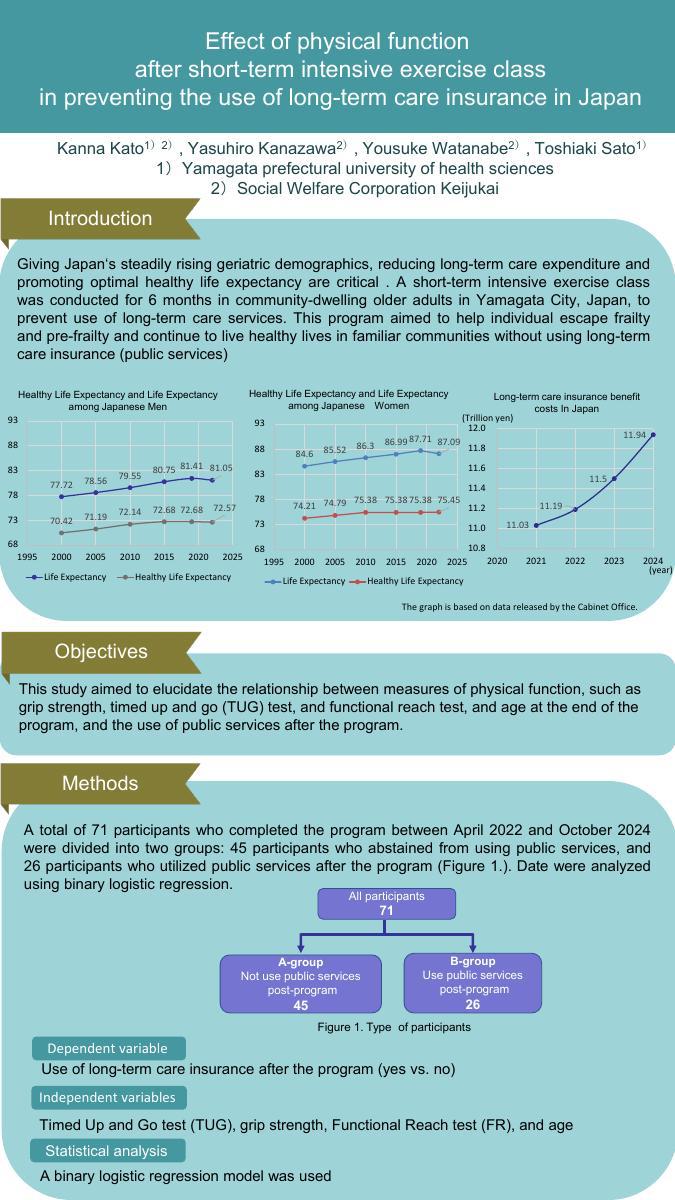
Introduction: Giving Japan‘s steadily rising geriatric demographics, reducing long-term care expenditure and promoting optimal healthy life expectancy are critical . A short-term intensive exercise class was conducted for 6 months in community-dwelling older adults in Yamagata City, Japan, to prevent use of long-term care services. This program aimed to help individual escape frailty and pre-frailty and continue to live healthy lives in familiar communities without using long-term care insurance (public services)
Objectives and Methods: This study aimed to elucidate the relationship between measures of physical function, such as grip strength, timed up and go (TUG) test, and functional reach test, and age at the end of the program, and the use of public services after the program. A total of 71 participants who completed the program between April 2022 and October 2024 were divided into two groups: 45 participants who abstained from using public services, and 26 participants who utilized public services after the program. Date were analyzed using binary logistic regression.
Results: A significant association was observed between results of TUG test at the end of program and the use of public services after the program (odds ration=1.36, 95% confidence interval: 1.05 – 1.76, p <0.05).
Conclusion: This study highlights the importance of enhancing walking ability to increase the effectiveness of intensive exercise classes, prevent use of long-term care insurance, and enable longer in community living without using public services.