
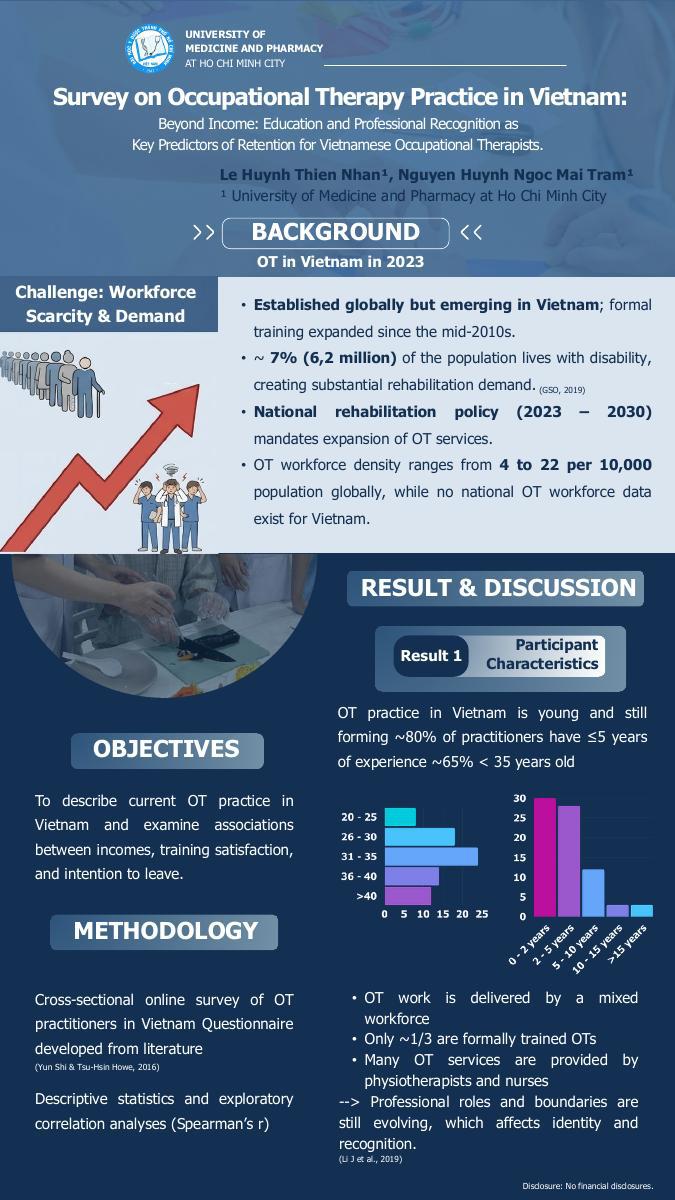
Introduction: In 2016, Vietnam was reported with 7% of the population having disabilities. Enhancing quality of life and job opportunities for people with disabilities is a top priority in Vietnam. Occupational Therapy (OT) is essential in helping individuals with disabilities improve daily activities and reintegrate into society. Despite being a well-established profession in many countries, OT is newly established in Vietnam. Given the significant number of people with disabilities, the demand for OT services is essential.
Objectives: This study aims to investigate the current OT practice in Vietnam.
Methodology: An online survey was translated and adapted to Vietnamese, using the snowball sampling method, we investigated the educational background, years of working, work setting, income, OT interventions, and factors related to job satisfaction among OT practitioners in Vietnam.
Results: The survey of 76 occupational therapists in Vietnam revealed that the majority of practitioners were young and had less than 5 years of experience. Most therapists had received OT-related training rather than formal degrees in OT. Participants primarily worked in hospitals and focused on ADLs, IADLs, and occupation-based interventions. Job satisfaction was generally positive, but some therapists planned to leave due to issues like a lack of respect from other healthcare professionals. Education and job satisfaction were key factors in retention, and participants expressed the need for ongoing support and training in OT.
Conclusion: The OT workforce in Vietnam is young and lacks professional experience. To retain talent, it is important to create a positive work environment, offer professional development opportunities, and ensure high-quality training programs.