
Introduction / Rationale:
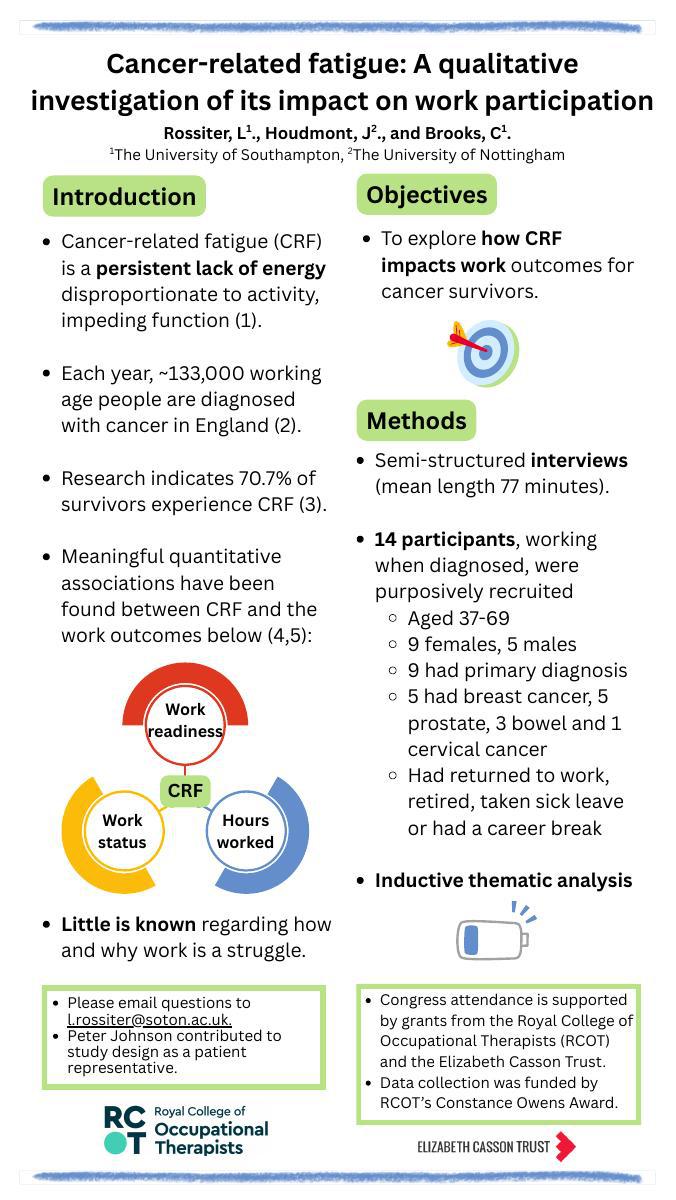
Cancer-related fatigue has been associated with a range of disruptive work outcomes in quantitative studies globally. However, little is known about the underlying mechanisms and factors contributing to these challenges for people living with cancer-related fatigue.
Objectives:
This study explores cancer survivors’ narrative accounts to understand how fatigue impacts individuals’ capacity to engage and participate in work-related tasks.
Methods / Approach:
Fourteen UK cancer survivors (n=9 women, n=5 men) living with cancer-related fatigue and working when diagnosed with cancer were purposively recruited to participate in semi-structured interviews via Microsoft Teams or telephone. Participants were work returners, retired, on sick leave, or having a career break when interviewed. Data were thematically analysed with themes developed inductively.
Results / Practice Implications:
Four main themes were revealed through the analysis, each with two sub-themes: (1) Occupational disruption, through work absenteeism and stopping work, (2) Fatigue impacting occupational performance, as participants assess their functional capacity to work alongside their symptoms, (3) Occupational factors influencing fatigue, including work demands and enablers, and (4) Workplace accommodations and support from organisations and healthcare professionals to address fatigue-related challenges. These findings suggest occupational therapists should provide rehabilitation-oriented strategies for managing fatigue and suggest work modifications and accommodations employers can implement collaboratively with employees. This input could support sustainable work retention and functional rehabilitation.
Conclusion / Contribution to the occupational therapy profession:
Cancer-related fatigue symptoms are severe and can have a prolonged impact on occupational engagement and role performance at work. A person-centred approach to occupational therapy research and rehabilitation practice is essential to understanding the diverse factors influencing survivor work participation and role adaptation.