
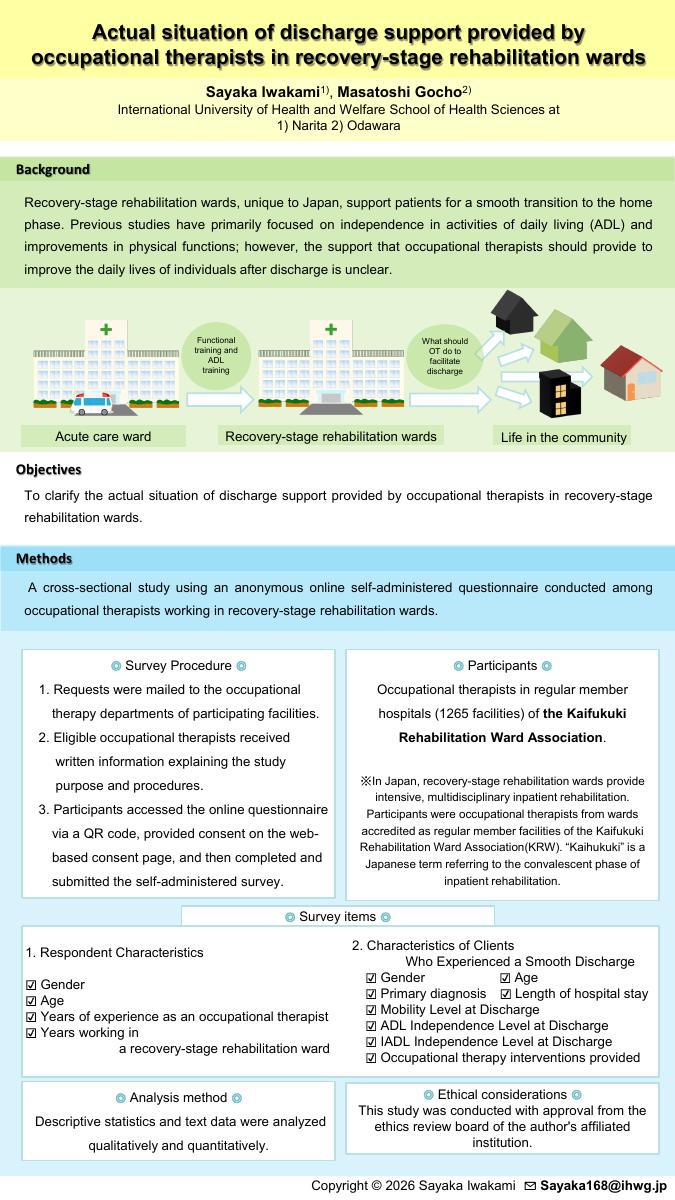
Background: Recovery-stage rehabilitation wards, unique to Japan, support patients for a smooth transition to the home phase. Previous studies have primarily focused on independence in activities of daily living (ADL) and improvements in physical functions. However, the support that occupational therapists should provide to improve the daily lives of individuals after discharge is unclear.
Objectives: To clarify the actual situation of discharge support provided by occupational therapists in recovery-stage rehabilitation wards.
Methods: This was an online, anonymous, and self-administered cross-sectional survey study on occupational therapists in regular member hospitals (1265 facilities) of the Kaifukuki Rehabilitation Ward Association. Survey items included basic attributes (e.g., age, sex, disease, and period of hospital stay) of individuals whose discharge was smooth and descriptions of occupational therapy (free entry). Descriptive statistics and text data were analyzed qualitatively and quantitatively.
Results: In total, 621 effective responses were received. The mean age of individuals whose discharge was smooth was 73 ± 14 years, the male:female ratio was 2:3, and the disease ratio of cerebrovascular:locomotor:other was 12:7:1. Regarding occupational therapy, specific interventions centered on ADL independence training, including laundry, cooking, and cleaning, were implemented. For discharge support, many responded that thorough family guidance was effective.
Discussion: The results of this study suggest that smooth discharge support requires interprofessional collaboration, with occupational therapists in recovery-stage rehabilitation wards focused on environmental factors and independence support to improve the daily lives of patients after discharge.