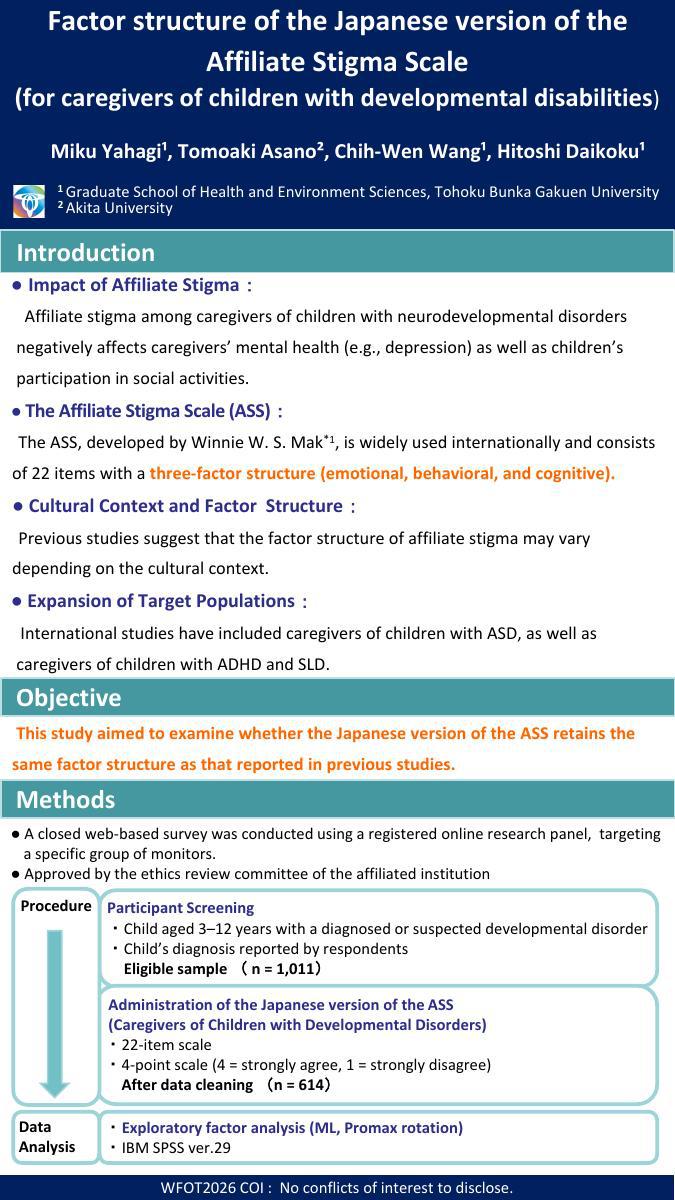
Introduction / Rationale:This study aims to develop a measurement scale for "Affiliate Stigma (ASS)" experienced by caregivers of children with neurodevelopmental disorders in Japan. The ASS scale was originally developed by Winnie W. S. Mak and consists of 22 items with a three-factor structure (emotional, behavioral, and cognitive).
Objectives:This study examines whether the Japanese version of the ASS retains the same factor structure as previous research.
Methods / Approach:A web-based survey was conducted with 1,011 caregivers of children with neurodevelopmental disorders. Exploratory factor analysis (maximum likelihood estimation with Promax rotation) was performed using SPSS ver.29. The study was approved by the ethics review committee of the affiliated institution.
Results / Practice Implications:An analysis of 281 participants revealed that the Japanese version of the ASS scale (Caregiver Version for Children with Neurodevelopmental Disorders) exhibited a two-factor structure. The first factor represented the psychological impact of stigma, leading to avoidance of interpersonal relationships and behavioral restrictions. The second factor reflected the psychological burden and emotional aspects associated with caregiving.
Conclusion / Contribution to the occupational therapy profession:This study confirmed a different factor structure from previous research, suggesting the influence of cultural differences. Caregiver stigma has been reported to negatively affect mental health and children's participation in social activities. The findings of this study are expected to contribute to cross-cultural research on stigma.
