
Introduction
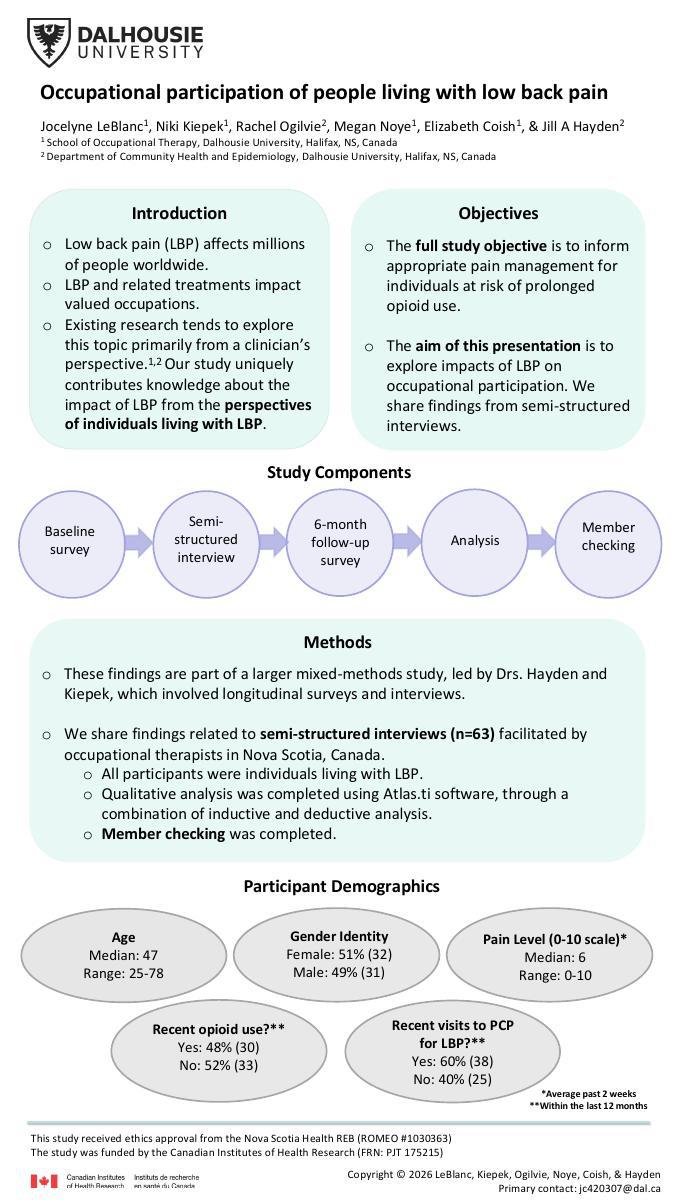
Low back pain (LBP) affects millions of people worldwide. Living with LBP can have various influences on people's day-to-day lives, yet this topic is largely unexplored in occupational therapy literature.
Objectives
A goal of our study is to inform appropriate pain management for individuals at risk of prolonged opioid use. In this presentation, we focus on understanding the impact of LBP on occupational participation.
Methods
This mixed methods study involved baseline and follow-up surveys, and semi-structured interviews. Participants were people living with LBP. We share our thematic analysis of the interviews (n=63).
Results
Our findings demonstrate that people with LBP face changes to occupational participation. Participants often gave up occupations or modified how they engaged in occupations. For instance, participants reported giving up leisure activities, changing jobs, and relying on family to take on roles they had traditionally fulfilled. New activities that did not exacerbate pain or fatigue were taken up. Predominantly, participants did not convey a sense of loss or disability. They conveyed experiences of acceptance and self-reliance. Pain management became a central occupation for many participants. Participants dedicated substantial time and effort to participate in exercise, use therapeutic modalities, attend appointments, navigate the complex healthcare system, and more. Pharmacological pain management tended to be framed as necessary to offer at least some relief, but as insufficient. In our study, only one participant said they had accessed occupational therapy.
Conclusion
LBP significantly impacts occupational performance and can result in occupational imbalance, yet occupational therapy services remain underutilized.