
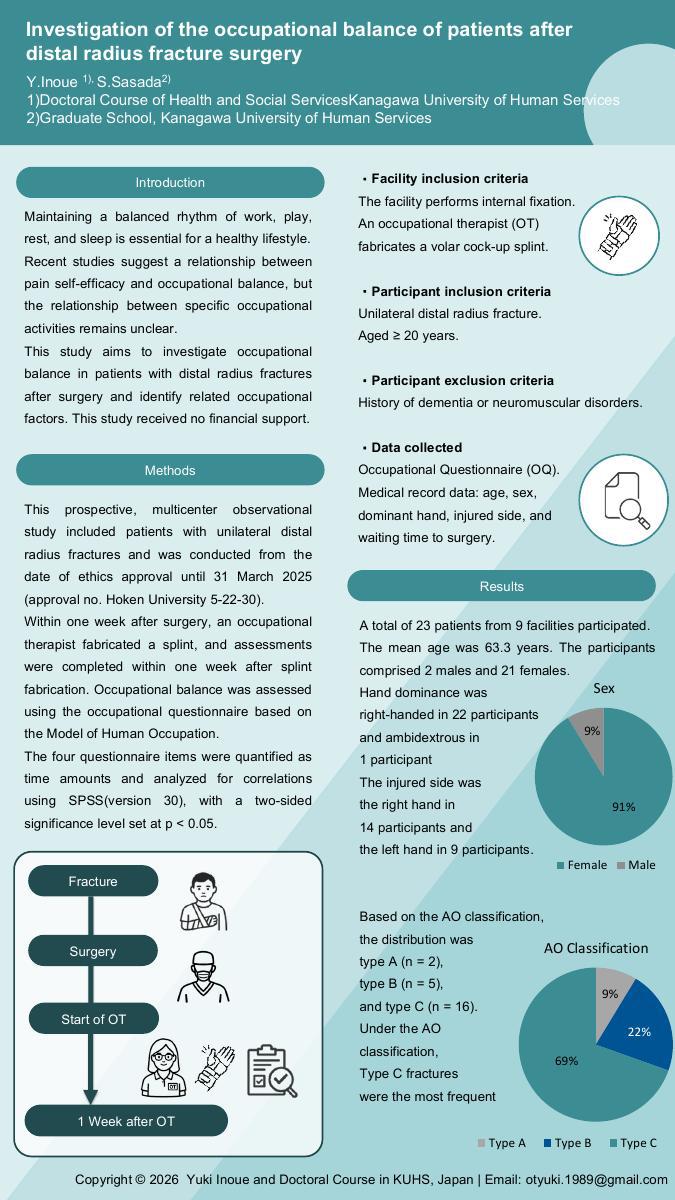
Introduction: Maintaining a balanced rhythm of work, play, rest, and sleep is essential for a healthy lifestyle. Recent studies suggest a relationship between pain self-efficacy and occupational balance, but the relationship between specific occupational activities remains unclear. This study aims to investigate occupational balance in patients with distal radius fractures after surgery and identify related occupational factors.
Methods: This prospective, multicenter observational study included patients with unilateral distal radius fractures. Occupational balance was assessed using the occupational questionnaire based on the Model of Human Occupation. The four questionnaire items were quantified as time amounts and analyzed for correlations using SPSS.
Results: A total of 23 patients from 9 facilities participated. Spearman’s rank correlation analysis showed that weekday work was negatively correlated with weekday rest (rs=-0.573) but positively correlated with weekend work (rs=0.719) and weekend leisure (rs=0.372). Weekday activities correlated positively with weekend activities (rs=0.776). Weekday leisure was negatively correlated with weekday rest (rs=-0.516) and weekend rest (rs=-0.405) but positively correlated with weekend leisure (rs=0.758). Weekday rest correlated positively with weekend rest (rs=0.802).
Conclusion: These findings suggest that patients who spend more time on work or leisure activities during the week may have less weekday rest, while those who rest more during the week may engage less in work or leisure and rest more on weekends. Identifying patients with prolonged rest periods due to fractures could help provide early activity support.