
Introduction.
VR is a new technology in stroke rehabilitation. In this study, we measured the effects on the brain when mirror therapy and VR were combined.
Objective
The purpose of this study is to confirm evidence for clinical practice by measuring brain activity when activities using VR were introduced.
Methods
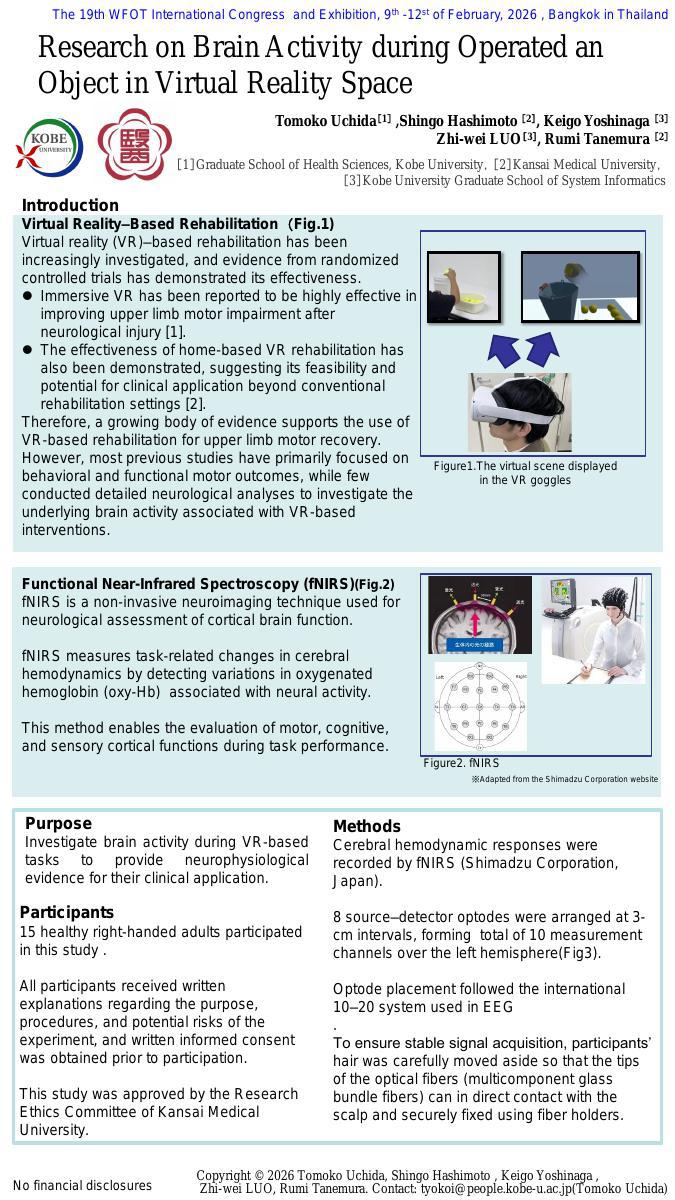
We conducted experiments on healthy adult subjects wearing NIRS probes under three conditions: (1) when they operated an object with their dominant hand, (2) when they operated an object in a VR image, and (3) when they watched a VR image in which they operated an object with their dominant hand, and investigated changes in cerebral blood flow during these conditions. The NIRS system was manufactured by SHIMAZU CORPORATION, and the probe was attached around the motor cortex. The cerebral blood flow was measured during 30 seconds of activity after a one-minute rest in each of the three conditions and was repeated three times.
Results
Data were obtained from one case. In conclusion, an increase in blood flow was observed in all three conditions compared to those when at rest. A statistical comparison of blood flow between three conditions will be presented at this conference.
Contributions
The virtual reality provided by VR is characterized by a high degree of immersion that makes the experience of being in the space projected in the images feel more realistic. Confirming the neurological benefits of VR mirror therapy, which combines VR and mirror therapy, will enable rehabilitation to be performed in any environment.