
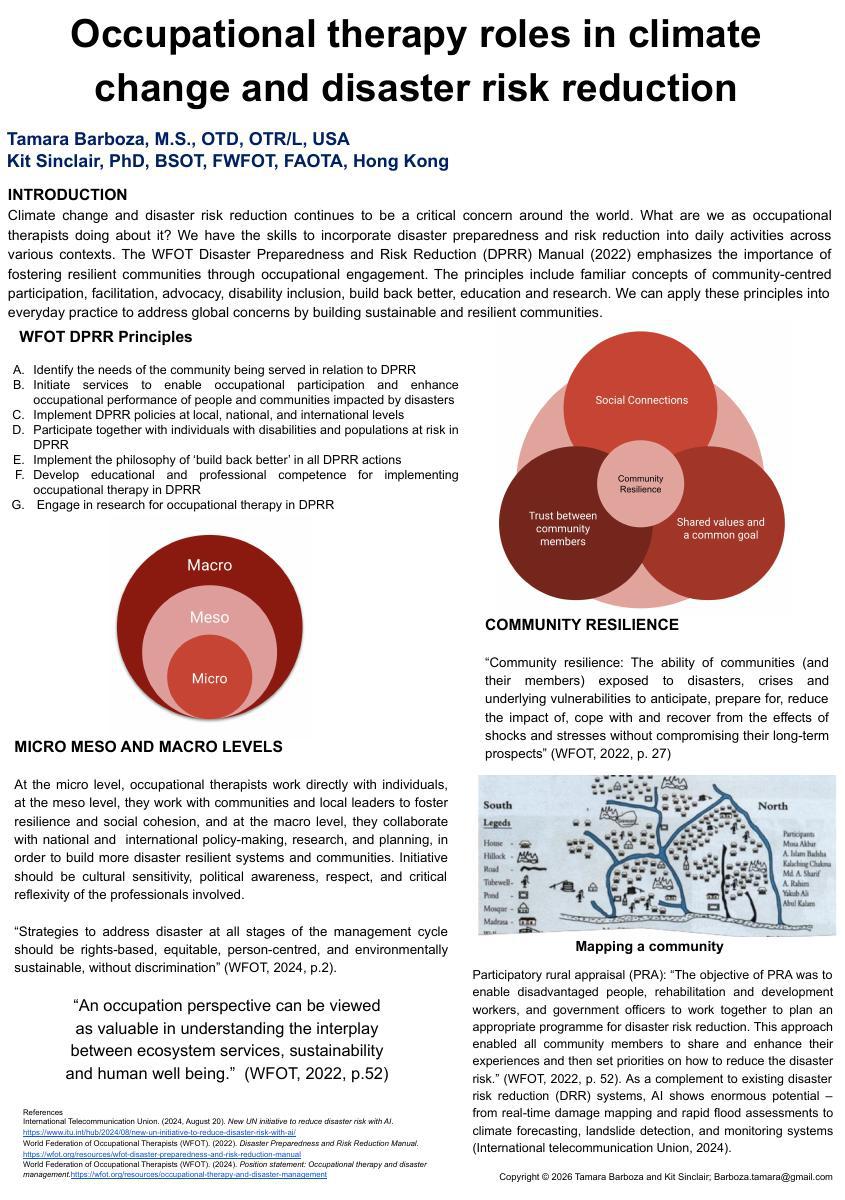
Introduction/Rationale: Climate change and disaster risk reduction continues to be a critical concern around the world. The WFOT Disaster Preparedness and Risk Reduction (DPRR) Manual (2022) emphasizes the importance of fostering resilient communities through occupational engagement. The principles include familiar concepts of community-centred participation, facilitation, advocacy, disability inclusion, build back better, education and research. We can apply these principles into everyday practice to address global concerns for building sustainable and resilient communities.
Objectives: This presentation emphasizes the need for occupational therapists to foster community resilience through engagement in everyday activities. Occupational therapists should engage with current community social networks to support household roles in preparing home, neighbourhood, and broader community to reduce disaster risks.
Methods/Approach: Interviews by the first author showed that occupational therapists around the world identified contexts in which to collaborate with communities (e.g. library, community hall, etc.) whilst incorporating meaningful and sustainable occupations to promote a close relationship between the needs of the community and the environment.
Results/ Practice Implications: Occupational therapists can raise community awareness of disaster preparedness in response to climate change. Using DPRR principles, they can foster resilient communities and improve engagement in everyday interactions and across contexts as illustrated by global examples which will be shared.
Conclusion/ Significance to the Occupational Therapy profession: Actions for learning and research are necessary for disaster preparedness and risk reduction to be incorporated into everyday occupational therapy practice.