
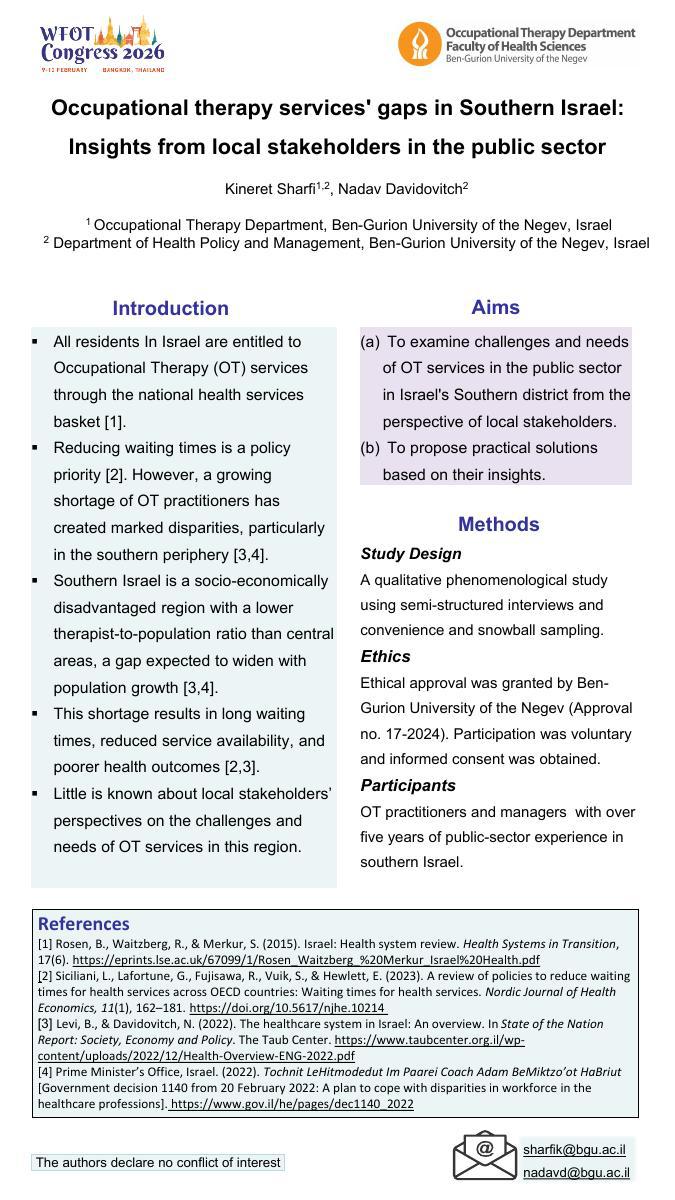
Introduction / Rationale: The Israeli public health system faces a growing shortage of OTs, with an even lower OT-to-population ratio in the peripheral Southern district compared to central Israel. This imbalance results in longer waiting times for OT services, affecting the OTs and local populations. Reducing these waiting times is a key policy priority, yet no research has explored the specific challenges and needs of OT services in the Southern district as perceived by local stakeholders.
Objectives: (a) Examine the characteristics, challenges, and needs of OT services in the public sector in Israel's Southern district from the perspective of local stakeholders; (b) Propose practical solutions based on these perspectives.
Methods / Approach: A qualitative study was conducted using semi-structured interviews and snowball sampling with 18 participants including OTs and OT managers in the Southern district. Ethics approval was obtained from Ben-Gurion University of the Negev. Data is being analyzed through the Ecological Model in public health.
Results / Practice Implications: Data analysis is ongoing, revealing factors related to the individual level, the professional OTs sector level, organization and policy levels. Full findings will be shared at the congress.
Conclusion / Significance to the Occupational Therapy Profession: The shortage and gaps in OT services in Israel’s Southern district negatively impact healthcare professionals and disadvantaged populations. Exploring local stakeholders' perceptions may help optimize OT services' organization and policy and reduce waiting times to improve accessibility for the local population.