
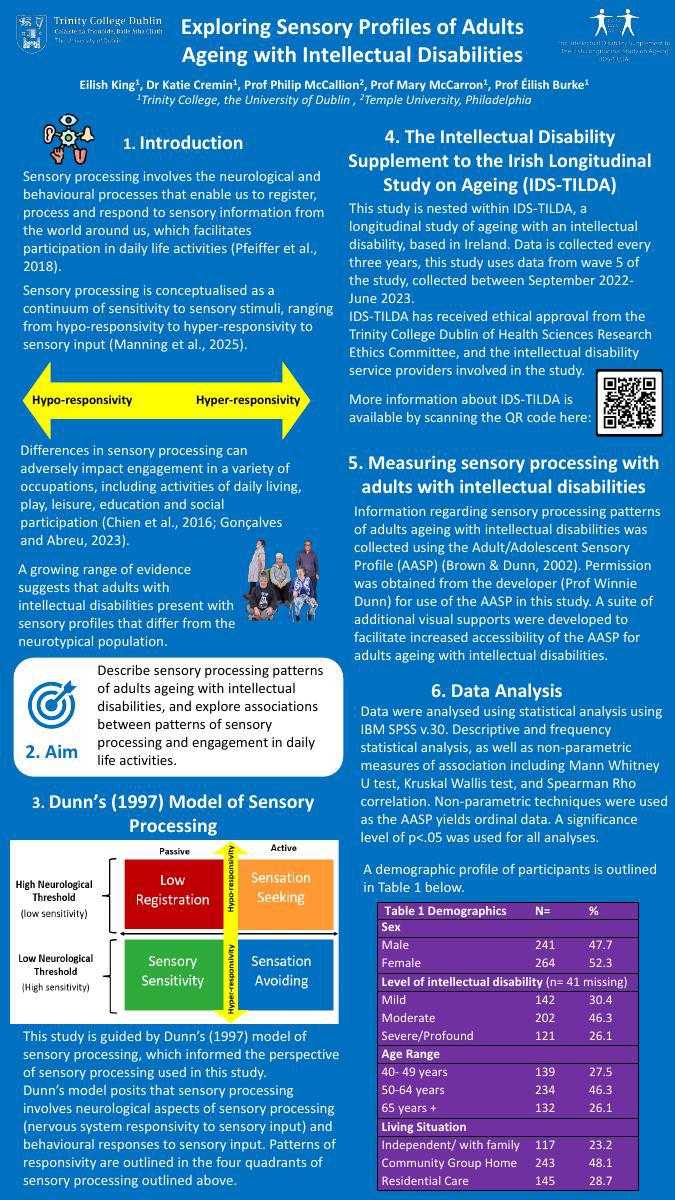
Introduction. A growing body of evidence suggests that adults with intellectual disabilities may experience differences in sensory processing, however gaps exist in relation to understanding sensory processing amongst older adults with intellectual disabilities.
Objectives. Sensory processing patterns were explored amongst a sample of adults ageing with intellectual disabilities, and relationships between sensory processing and engagement in daily life activities were analysed quantitatively.
Methods. The Adult/Adolescent Sensory Profile (AASP) was completed with 479 adults aged 40 years and older with intellectual disabilities within a longitudinal study of ageing with an intellectual disability. Ethical approval and informed consent were obtained. Data were analysed descriptively, using Chi square tests for independence, one way ANOVA and t-tests using the Statistical Package for the Social Sciences V.26.
Results. Diverse ranges of responses to sensory input were identified. Overall, many adults ageing with intellectual disabilities presented broadly similar profiles of sensory processing to aged-matched general population data. There was evidence of increased sensory sensitivity to taste and smell, and sensation seeking in relation to movement, visual, auditory and tactile input (touch) within daily life activities amongst the sample.
Conclusion. Understanding the sensory processing patterns of adults ageing with intellectual disabilities is important in order to inform supports for adults with intellectual disabilities who present with differences in their sensory processing, and to inform occupational therapy practice with this population.