
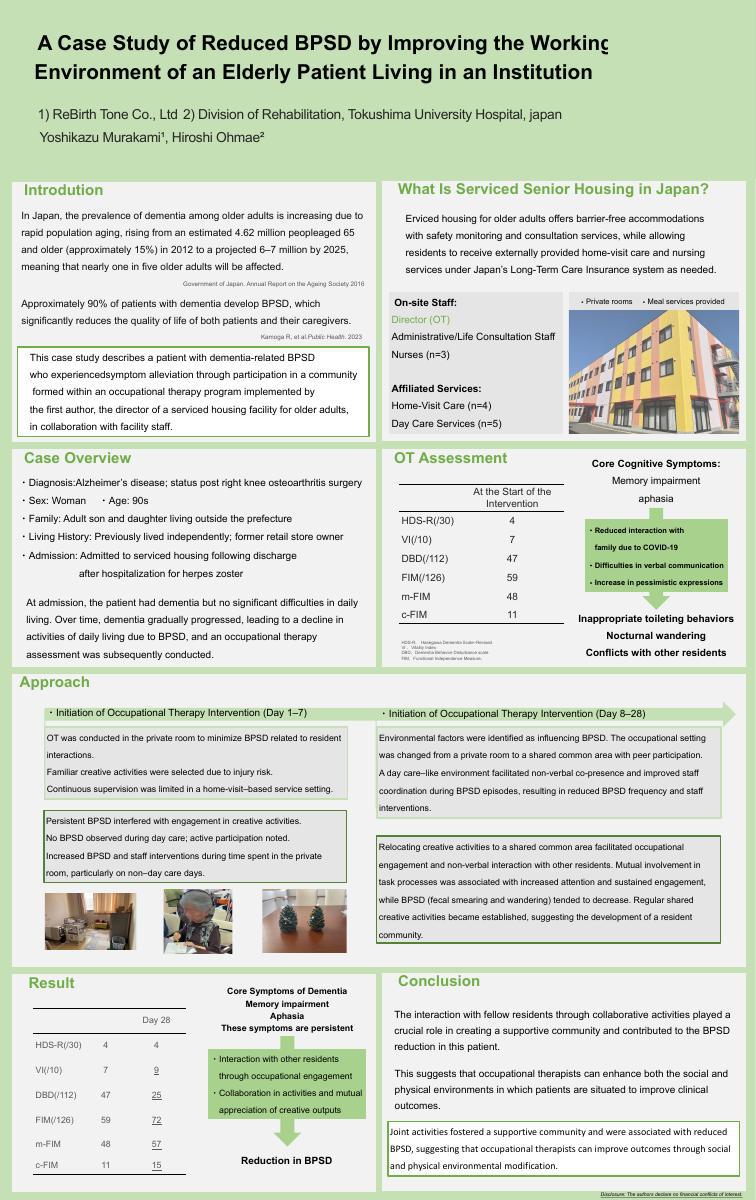
Introduction: The prevalence of dementia among the elderly is on the rise, with behavioral and psychological symptoms (BPSD) frequently reported to negatively affect the quality of life (QOL) of patients and their families.
Objective: This case study reports a patient with exacerbated BPSD associated with dementia who experienced symptom alleviation through participation in a community formed within an occupational therapy program.
Approach: Initial assessment revealed the following scores. Hasegawa‘s dementia scale 4/30, vitality index (VI) 7/10, dementia behavioral disorder scale (DBD) 47/112, and functional independence measure (FIM) 59/126 (motor-FIM 48, cognitive-FIM 11). Upon admission, the patient exhibited memory deficits and aphasia, which hindered communication with other residents. In the first phase (days 1 to 7), creative activities were introduced during leisure time, but the patient struggled with focus and frequently exhibited restlessness, wandering the hallways. In the second phase (days 8 to 28), other residents were invited to participate in the activities, tasks were shared, and a cooperative environment was established, which fostered mutual oversight among the residents. Through this collaborative approach, communication improved, BPSD symptoms gradually diminished, and negative statements became less frequent.
Results: Post-intervention assessments showed improvement: VI 9/10, DBD 25/112, and FIM 72/126 (motor-FIM 57, cognitive-FIM 15).
Conclusion: The interaction with fellow residents through collaborative activities played a crucial role in creating a supportive community and contributed to the BPSD reduction in this patient. This suggests that occupational therapists can enhance both the social and physical environments in which patients are situated to improve clinical outcomes.