
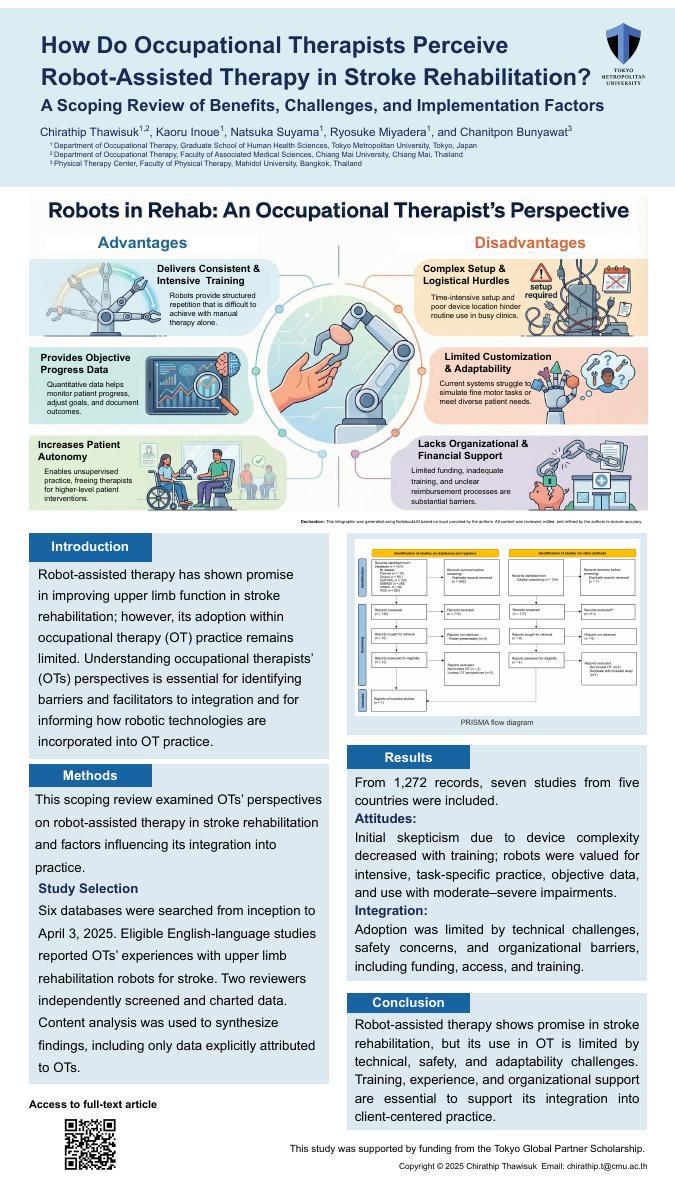
Introduction / Rationale: Robot-assisted therapy has shown promise in improving upper limb function in stroke rehabilitation. Despite its potential, the adoption of these technologies by occupational therapists remains limited. Understanding therapists' perspectives is essential for successfully integrating robotics into practice and ultimately improving patient outcomes.
Objectives: This scoping review aims to explore occupational therapists’ perceptions of robot-assisted therapy in stroke rehabilitation, focusing on the benefits, challenges, and factors influencing its implementation.
Methods / Approach: A scoping review was conducted following the Arksey and O'Malley framework. Literature was searched across PubMed, EMBASE, CENTRAL, Scopus, Web of Science, and CINAHL. The search targeted six key concept areas: occupational therapy, upper extremity rehabilitation, stroke, robotic interventions, and therapists' perceptions/attitudes. Studies in peer-reviewed journals from database inception to October 2024 were included.
Results / Pracetice Implications: Seven studies were analyzed, revealing that while therapists initially expressed skepticism, training and hands-on exposure led to more positive perceptions. Robotics was appreciated for supporting high-repetition, task-specific training, and enhancing patient motivation. However, barriers such as difficulties with device setup, customization, and safety concerns were identified. Additionally, institutional and systemic challenges, such as training, funding, and organizational support, were crucial for successfully implementing robotic devices.
Conclusion / Contribution to the occupational therapy profession: This study highlights both the challenges and opportunities associated with integrating robotic-assisted therapy into stroke rehabilitation, particularly the need for alignment with client-centered principle. Future research should focus on enhancing the adaptability of robotic-assisted therapy and exploring its integration into occupational therapy practice to optimize rehabilitation outcomes.