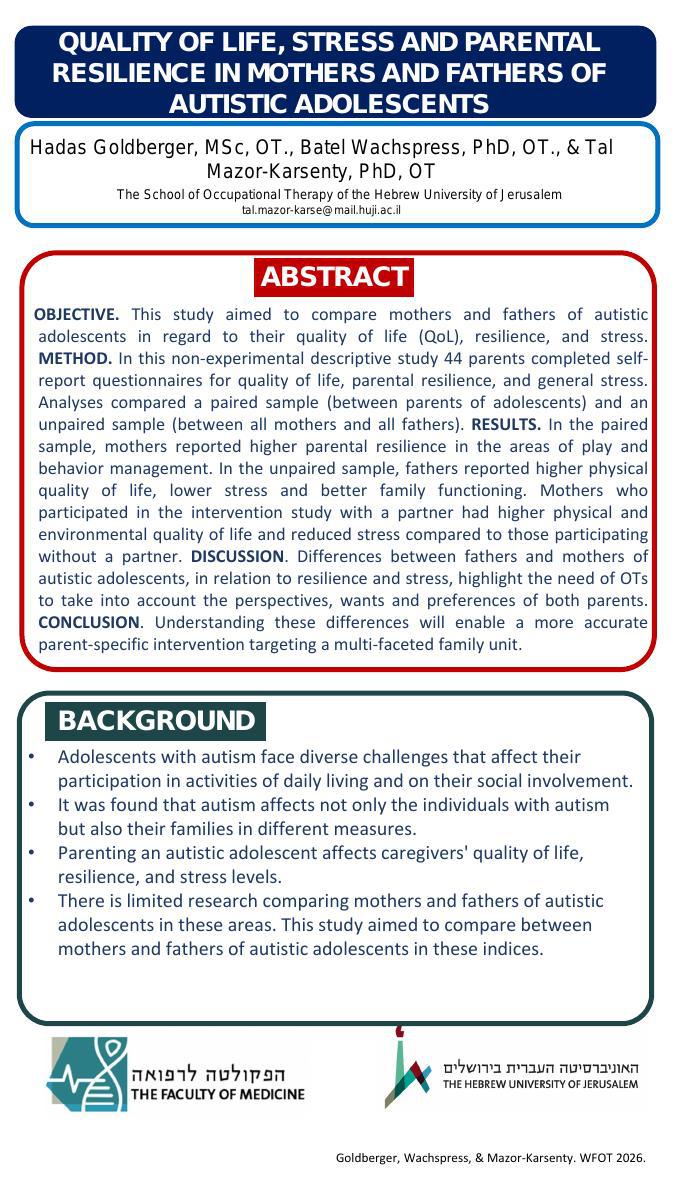
Introduction: Autistic adolescents often face challenges that impact their ability to participate in everyday life. This may affect the quality of life, stress, and resilience of their caregivers. There is limited research on the differences between mothers and fathers of adolescents with autism in these areas.
Objectives: This study aimed to explore whether there are differences between mothers and fathers of adolescents with autism in measures of quality of life, general stress, and parental resilience.
Methods: 44 parents of autistic adolescents participated, 15 fathers (Mage= 46.62 SD= 8.02) and 29 mothers (Mage= 43.69, SD=3.45). Parents filled self-report questionnaires to assess measures of quality of life (WHOQOL-BREF), general stress (GHQ-12), and parental resilience (APQ). A Wilcoxon test was conducted to compare fathers and mothers of the same adolescent (paired sample). Mann-Whitney test examined differences among fathers and mothers who are not parents of the same adolescent (unpaired sample).
Results: Significant differences between fathers and mothers were found in the paired sample in the subcategory of play and behavior management, and in the unpaired sample in the index of physical quality of life and in the subcategory of stress and family functioning. Significant differences were also found when comparing the mothers participating in both samples of the study in measures of physical and environmental quality of life and in the subcategory of stress.
Conclusion: These findings suggest that it is important to consider the perspectives, needs, and preferences of parents when providing guidance, and to also consider the measures of quality of life, general stress, and parental resilience of the caregiver when providing interventions and training for caregivers.
