
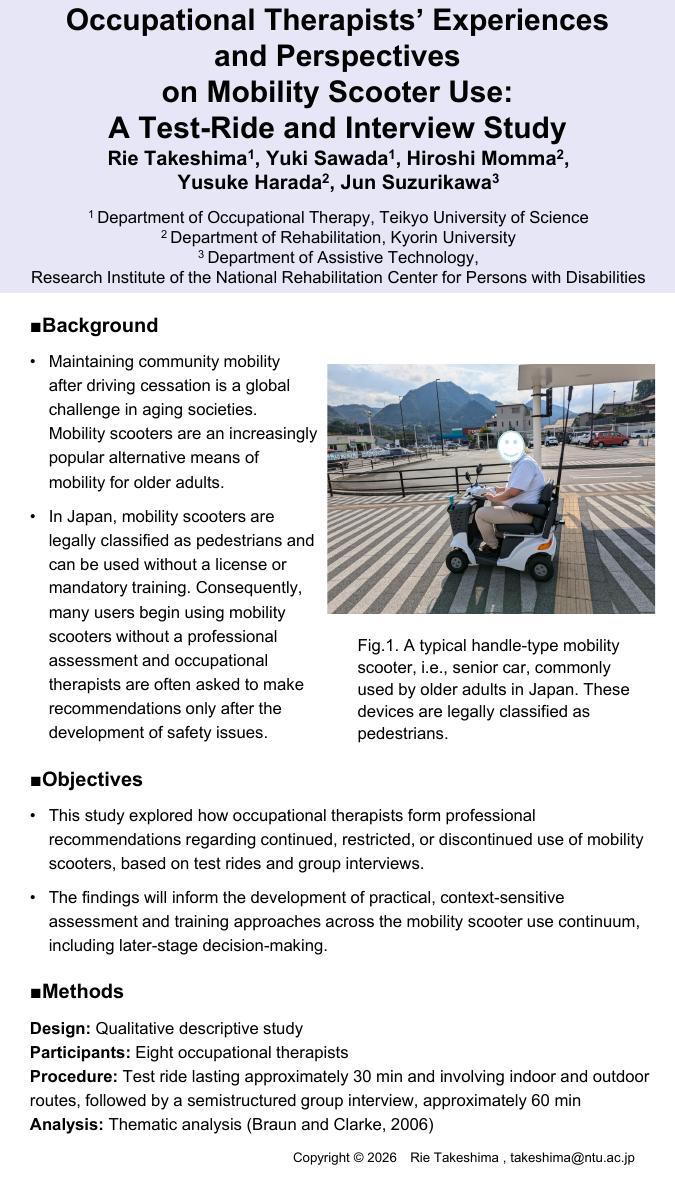
Introduction: Mobility scooters are legally classified as pedestrians in Japan and can be used without a license. Although they are available through long-term care insurance as powered wheelchairs, many individuals purchase them independently without professional assessment or training. Consequently, accidents related to insufficient knowledge and skills are prevalent. To improve safety, we have been developing quantitative assessment indicators for mobility scooter use. This study integrated occupational therapists’ perspectives into the development of an effective assessment and training program.
Objectives: This study will evaluate occupational therapists’ perspectives on mobility scooter operation, assessment, and intervention through test rides and interviews. The findings will contribute to the development of a practical assessment and training program for safe scooter use.
Methods: The participants were seven occupational therapists with experience supporting older adults and individuals with disabilities. They completed a test ride of approximately 30 min, covering around 2 km on an indoor and outdoor course, including public roads. Thereafter, they completed a questionnaire and participated in a 1-hour semistructured group interview to share insights on scooter operation, assessment, and intervention. Ethical approval was obtained from the affiliated institutions.
Results: The participants emphasized the need for professional assessment and training to ensure safe scooter use. They highlighted the importance of conducting training in real-life environments and tailoring support strategies to individual users and their specific environments.
Conclusions: This study highlights the essential role of occupational therapists in mobility scooter training and assessment. Incorporating their expertise can improve user safety and promote independence in community mobility.