
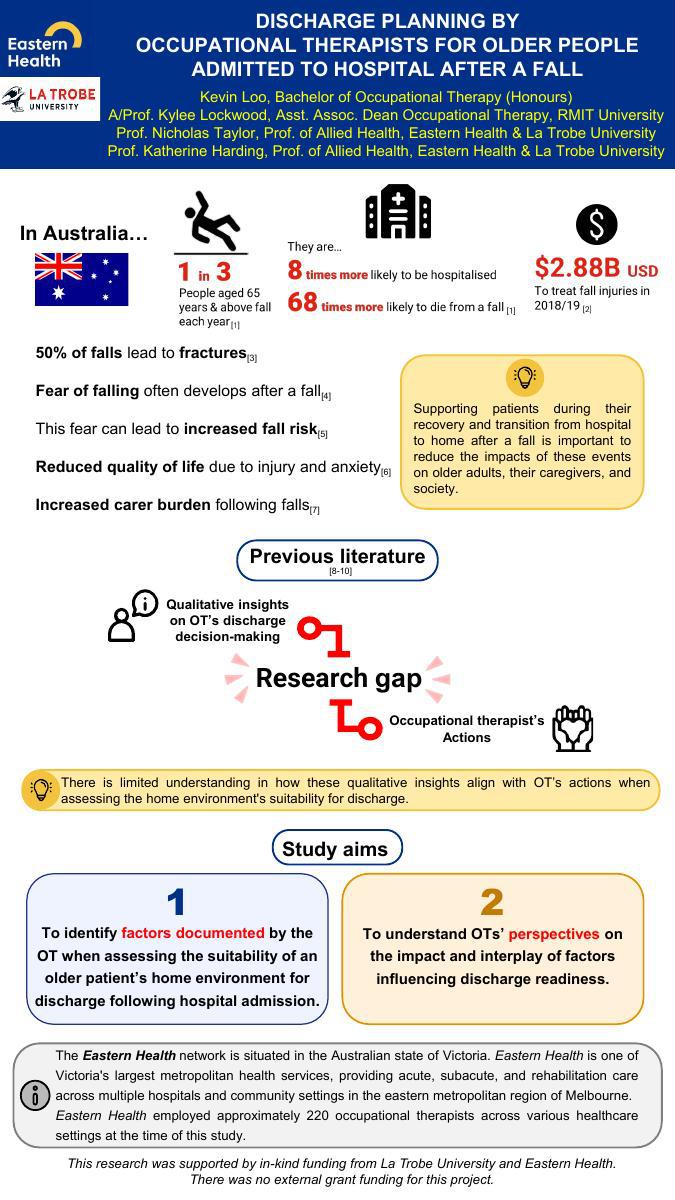
Introduction: Falls are the leading cause of injury-related hospitalisation and death among older adults in Australia. Effective discharge planning ensures a safe return home and reduces fall risk. Occupational therapists play a key role in assessing home environment suitability for discharge, yet factors guiding their decision-making remain underexplored.
Objectives: This study explored the factors occupational therapists consider when assessing the suitability of a patient’s home environment for discharge following a fall-related hospitalisation.
Methods: A mixed-method, sequential explanatory study was conducted. A retrospective audit of medical records of 100 randomly selected patients admitted to hospital after a fall was completed, and the factors identified by occupational therapists regarding the suitability of the home environment were documented and organised using the International Classification of Functioning, Disability and Health Framework. Logistic regression was used to identify factors associated with more frequent occupational therapy involvement. A subsequent focus group with nine occupational therapists was held to further understand the impact and interplay of the factors on discharge planning and determining the suitability of the home environment for discharge.
Results: Frequent involvement of occupational therapists in the discharge planning process was predicted by concerns in the ICF domains of “body function” and “activities and participation” but not the domain of “environment”. However, themes from the focus group discussion suggested that environmental factors were considered for all patients. Additionally, occupational therapists feel considerable responsibility in making recommendations and value the support of a multidisciplinary team.
Conclusion: Occupational therapists consider the complex interaction between the patient and their environment when considering home environment suitability for discharge after falls. The findings highlight the importance of client-centred practice and the need for collaborative discharge planning to navigate these complexities effectively.