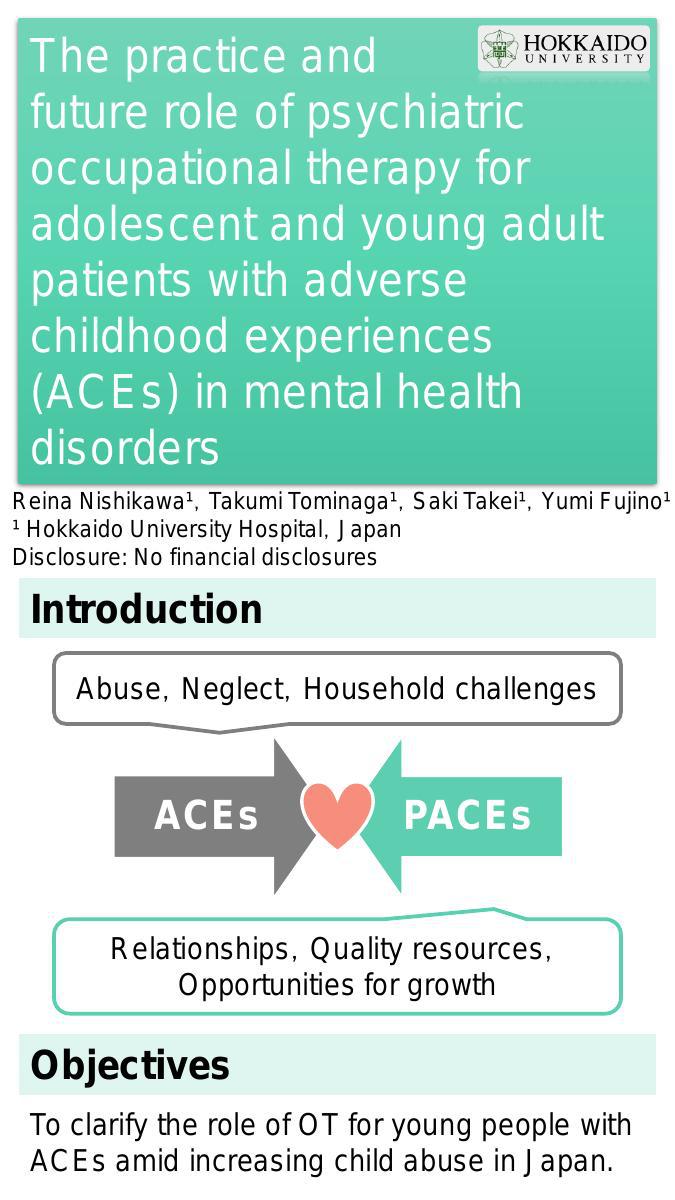
Introduction / Rationale:Childhood abuse, neglect, and family mental health issues, collectively known as Adverse Childhood Experiences (ACEs), can have a variety of negative effects on both physical and mental health. In contrast, positive experiences that counteract ACEs are referred to as Protective and Compensatory Experiences (PACEs).
Objectives:Given the increasing number of young people in Japan affected by abuse, this study aims to clarify the effects and role of psychiatric occupational therapy (OT) for young patients with ACEs and mental health disorders.
Methods / Approach:A female university student with borderline personality disorder, struggling with compulsive behaviors, self-harm, and academic pressure, was hospitalized and received OT five times a week. Activities such as knitting, beading, and puzzles were introduced to assist her in reintegrating into academic life. She was discharged after one year and continued outpatient OT for another year. Her ACEs score was 6, and her PACEs score was 9.
Results / Practice Implications:She developed new hobbies, including knitting, and received positive feedback during OT sessions. After discharge, she returned to school and began expressing her struggles with university life and her relationships with her parents and friends to the occupational therapist (OTR).
Conclusion / Contribution to the occupational therapy profession:Psychiatric OT is considered to play a significant role for young patients even after their return to school. Additionally, through positive experiences and a supportive relationship with the OTR, it is likely to serve as PACEs for young patients with ACEs. Moving forward, cognitive behavioral therapy and the acquisition of appropriate stress coping skills are expected to be crucial for promoting independence.
