
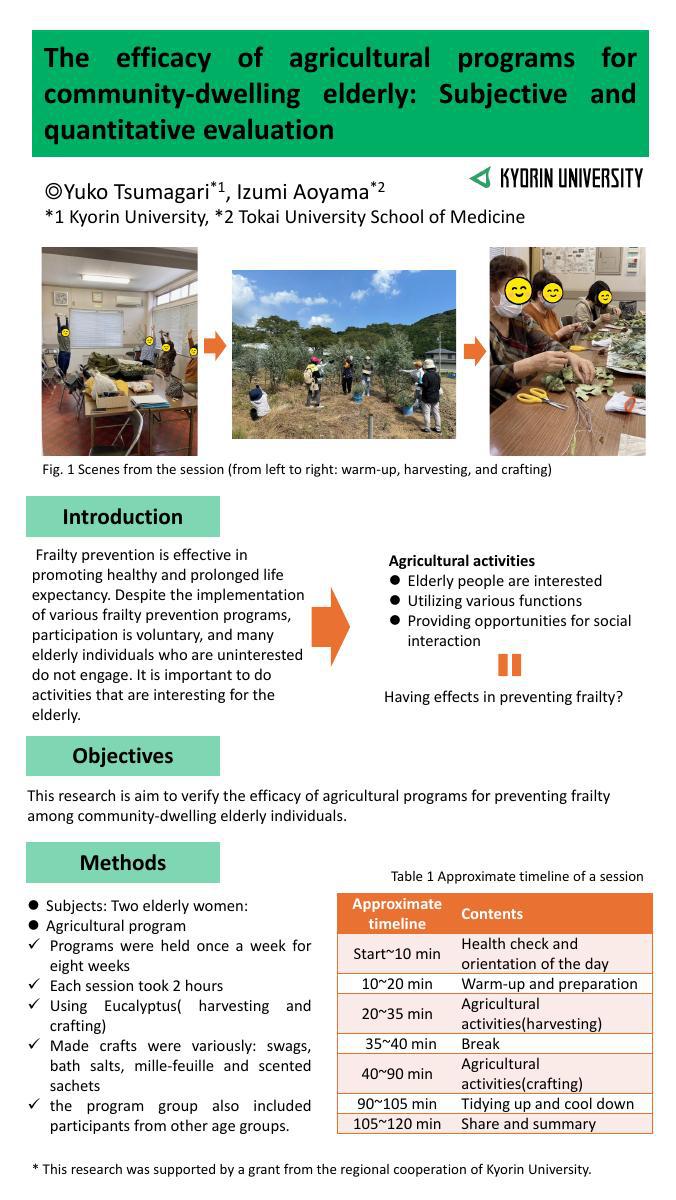
Introduction / Rationale: frailty prevention is effective in promoting healthy and prolonged life expectancy. Despite the implementation of various frailty prevention programs, participation is voluntary, and many elderly individuals who are uninterested do not engage. Agricultural activities, which are of interest to the elderly, are particularly effective in preventing frailty because they engage various functions and provide opportunities for social interaction.
Objectives: this study evaluated the efficacy of an agricultural program for preventing frailty among community-dwelling elderly individuals.
Methods / Approach: the study included two elderly women, but the program group also included participants from other age groups. The agricultural program, conducted once a week for 8 weeks, lasted 2 hours each session and involved activities using Eucalyptus. The study parameters included psychological assessments, mobility, instrumental activities of daily living, and quality of life (QOL). These were measured before and after the program and compared with the participants’ subjective impressions.
Results / Practice Implications: both participants attended all but one session because they had prior commitments. Both participants reported improved mobility and enjoyment from the program. Participant 1 socialized more and noticed an improvement in her QOL. Participant 2 did not perceive any changes, but the evaluations indicated improvements in her opportunities to go out and her self-efficacy in fall prevention.
Conclusion / Contribution to the occupational therapy profession: overall, participation in the agricultural program improved mobility, QOL, self-efficacy, and increased opportunities for participants to go outside. Although the changes were perceived differently between the two participants, the results suggest that agricultural programs may help prevent frailty among community-dwelling elderly individuals.