
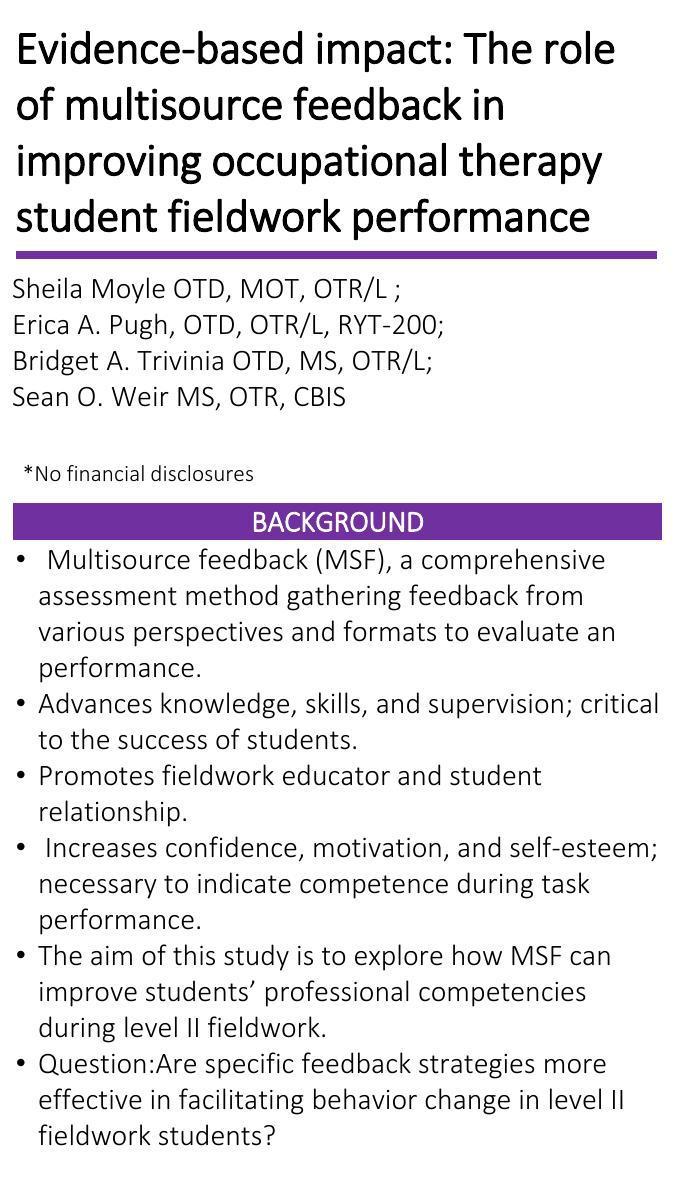
Introduction: Multisource feedback (MSF) is a comprehensive assessment method that involves gathering feedback from various perspectives to evaluate an individual’s performance. This study focused on how MSF can improve students’ professional competencies during level II fieldwork in occupational therapy.
Rationale/Objectives/Methods: MSF incorporates feedback from written, verbal, audio/visual, and self-reflection methods, aiming to enhance students’ understanding of their performance. The study sought to determine the effectiveness of MSF to improve students' skills and behavior during fieldwork. The research utilized a survey with level II fieldwork students from two universities. The survey collected data on the types of feedback methods used by fieldwork educators and students’ perceptions of their effectiveness in improving performance.
Approach/Results: Data was collected through a 43-question online survey distributed during the final weeks of students’ level II fieldwork. The study spanned multiple semesters, and data was analyzed using statistical software. The results identified which feedback methods have the most significant impact on student performance and provide insights for fieldwork educators.
Practice Implications: This study offers valuable information to fieldwork educators on effective feedback strategies, helping them improve supervision practices. Incorporating MSF could lead to enhanced student learning, behavior change, and better professional competencies.
Conclusion: This research contributes to evidence-based practices in occupational therapy education by examining the role of MSF in fostering student success during level II fieldwork, ultimately guiding educators in their teaching methods and feedback approaches.