Introduction: Autistic identity is shaped by personal experiences and societal perceptions. Many autistic individuals reject traditional ideas of normality and instead embrace their neurodivergence as part of their identity (Anderson-Chavarria, 2022; Bury et al., 2023). The neurodiversity paradigm recognizes autism as a natural part of human diversity and shifts the focus from deficits to strengths (Ne'eman & Pellicano, 2022; Urbanowicz et al., 2019). Research shows that a strong autistic identity is linked to higher self-esteem, lower anxiety, and depression (Cooper et al., 2017; Corden et al., 2021). Peer mentoring provides a space for autistic individuals to share experiences, build confidence, and reinforce a positive sense of self (Borthwick et al., 2020; Johnson & Rogers, 2020).
Objectives: This study examines how autistic-to-autistic peer mentoring influences identity development by assessing its impact on mentors and identifying emerging qualitative themes.
Methods: This mixed methods study is part of an ongoing peer mentoring program where autistic college students (n=11) mentor autistic high school students. Mentors complete training and pre/post assessments using the Disability Identity Development Scale (DIDS; Forber-Pratt et al., 2022). Semi-structured interviews explore identity shifts, which are analyzed using thematic analysis (Braun & Clarke, 2006) and a paired samples t-test.
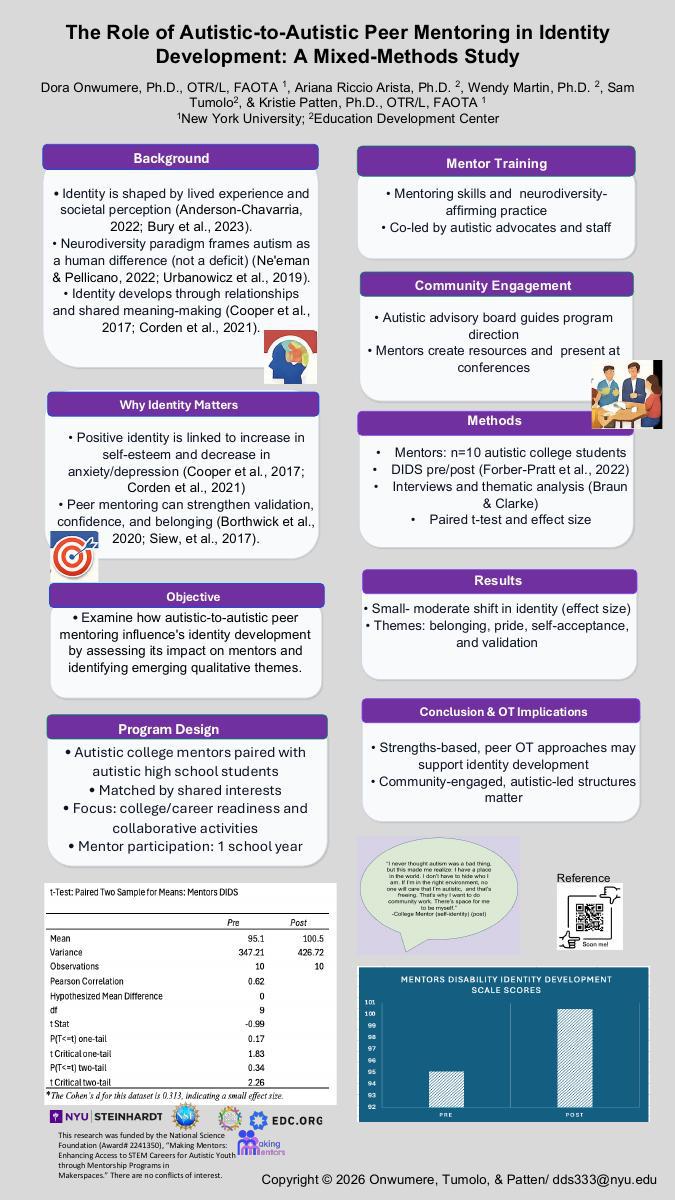
Results: Effect size analysis indicated a small to moderate shift in identity development. Qualitative findings revealed increased belonging, pride, and self-acceptance, with many mentors describing mentoring as a validating experience reinforcing their autistic identity.
Conclusion: Findings support occupational therapy interventions incorporating peer-based, strengths-focused approaches to enhance identity development for autistic individuals.