
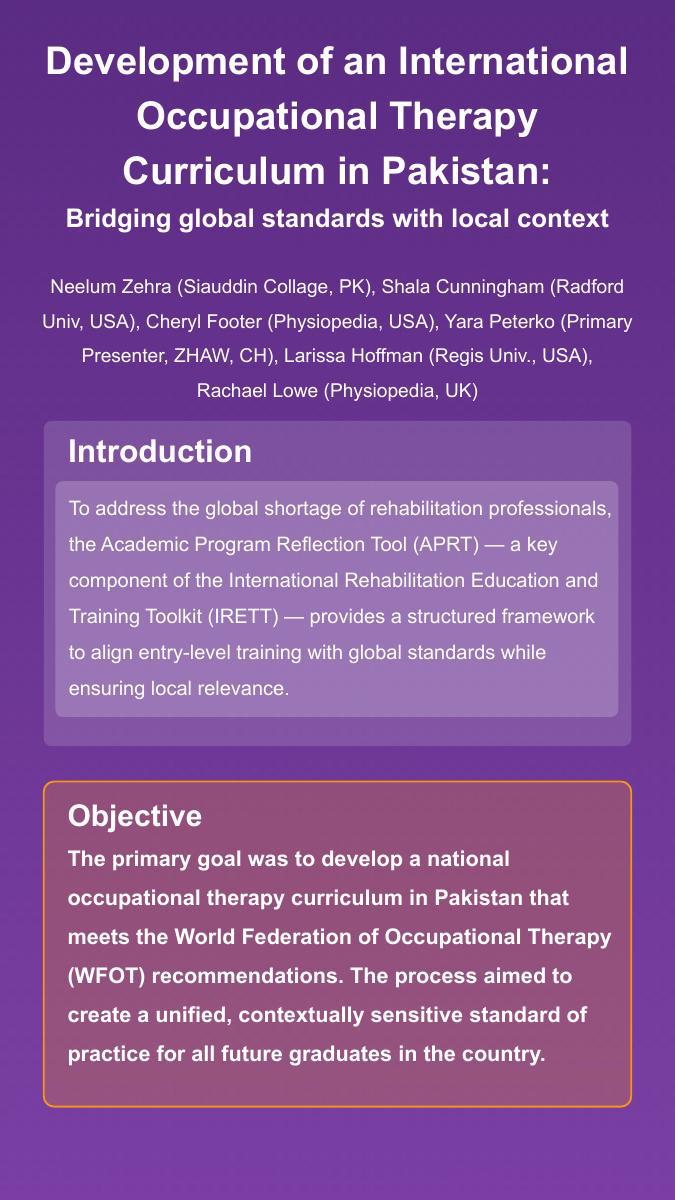
Introduction There is a global need to strengthen the rehabilitation workforce to address a personnel shortage and strengthen training programmes. This need coincides with the aim of academic entry-level programs to prepare the workforce with knowledge, skills, and behaviors that align with global standards. The Academic Program Reflection Tool (APRT) was developed to assist academic institutions that are developing new entry-level rehabilitation programs as well as reviewing existing academic programs.
Objectives A task force consisting of educators from multiple occupational therapy schools in Pakistan was developed to create a national occupational therapy curriculum that met the World Federation of Occupational Therapy recommendations while remaining culturally and contextually relevant.
Approach The APRT guides users in the process of reviewing and developing seven key components of academic programs: philosophy, curriculum, goals and outcomes, student admissions and support, program faculty, program resources, program integrity.
Practice Implications A national curriculum ensures that all graduates across the country receive consistent, high-quality training creating a unified standard of practice. This will assist in building a robust, context-sensitive, and sustainable occupational therapy workforce.
Significance to the Occupational Therapy Profession The APRT was successful in guiding the development of a national occupational therapy curriculum in Pakistan.