
Background:
Individuals with acquired brain injuries (ABIs) face challenges in returning to work due to organizational, societal, and personal factors, as well as inadequate support services. Although occupational therapists (OTs) are well-suited for work support, their roles and specific techniques are not well recognized by other professionals and stakeholders.
Objective:
This study aims to clarify the work-support techniques Japanese occupational therapists use for individuals with ABIs.
Methods:
Twenty Japanese OTs involved in ABI work support were interviewed using semi-structured interviews. The recorded data were transcribed, and thematic analysis was applied to identify key support techniques.
Results:
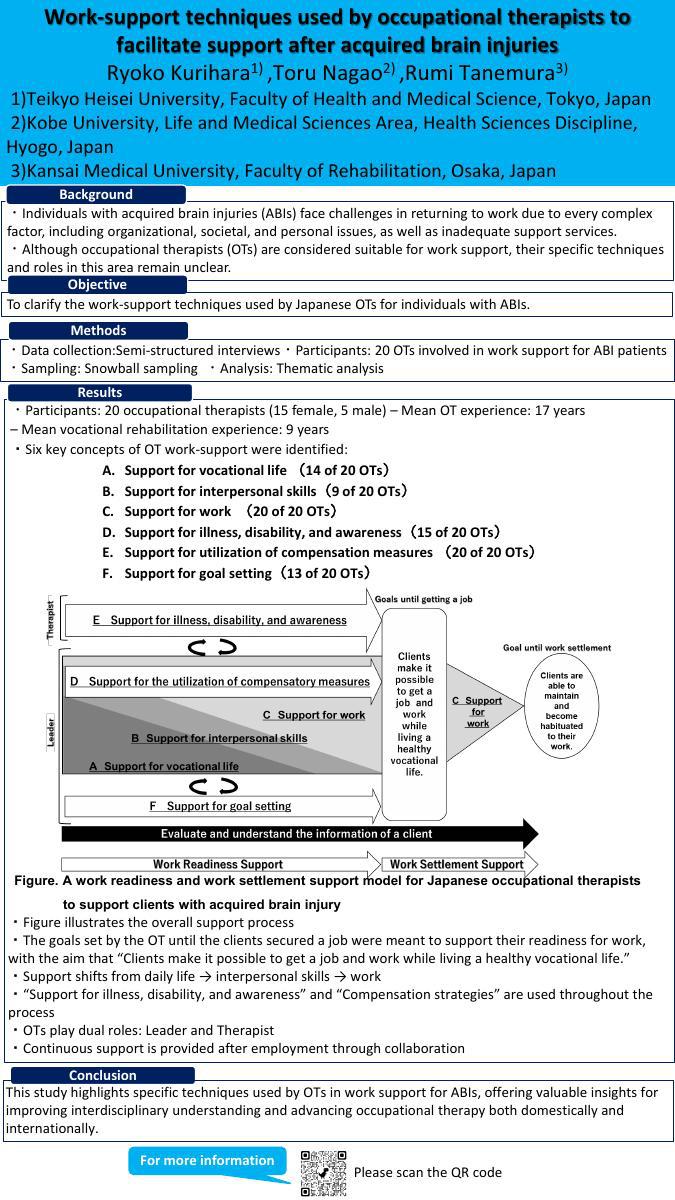
Participants averaged 17 years of experience as OTs and 9 years in work support. Six key support themes were identified:
- Awareness of illness/disability
- Support for occupational life
- Compensatory strategies
- Interpersonal skills
- Employment support
- Goal setting support
"Support for occupational life" formed the foundation, combined with interpersonal skills and compensatory strategies. Post-employment support involved collaboration with families, workplaces, and professionals.
Conclusion:
This study expands on ISPRM2021 findings by further analyzing the foundational role of occupational life support. These findings have been published in the Hong Kong Journal of Occupational Therapy (https://doi.org/10.1177/15691861231225754) but have not been presented at other conferences. The findings contribute to interdisciplinary collaboration and provide insights for advancing occupational therapy internationally.