
Introduction: Occupational therapists contribute to the management of the rapid increase in the number of people with dementia. However, evidence concerning occupational therapy for people with dementia is inadequate.
Objectives: This study aimed to examine the practice of occupational therapy for people with dementia in Japan and identify the intervention strategies that are being implemented.
Method: The target comprised 221 reports of occupational therapy for individuals with dementia registered between 2005 and 2024, which were retrieved from the case report registration system of the Japan Association of Occupational Therapists.
Their objectives and intervention policy texts were analyzed using text analysis software.
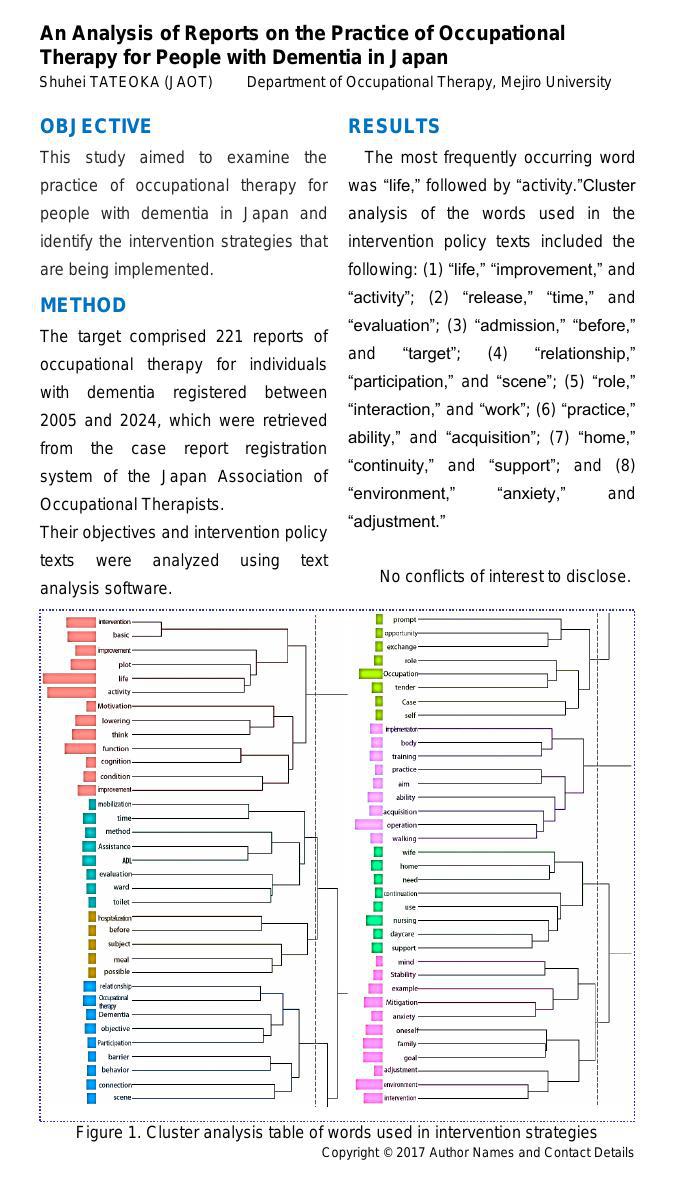
Results: The most frequently occurring word was “life,” followed by “activity.”
Cluster analysis of the words used in the intervention policy texts included the following: (1) “life,” “improvement,” and “activity”; (2) “release,” “time,” and “evaluation”; (3) “admission,” “before,” and “target”; (4) “relationship,” “participation,” and “scene”; (5) “role,” “interaction,” and “work”; (6) “practice,” ability,” and “acquisition”; (7) “home,” “continuity,” and “support”; and (8) “environment,” “anxiety,” and “adjustment.”
Discussion: The most frequently used words, “activity” and “life,” suggest that support was provided based on the expertise of occupational therapists for the following purposes: (1) “improving daily life functioning and activities,” (2) “increasing time out of bed,” (3) “paying attention to Characteristics prior to illness,” (4) “building close relationships,” (5) “providing tasks appropriate to the case,” (6) “acquiring movements through repeated practice,” (7) “providing ongoing support to the family,” and (8) “modifying the environment to promote mental stability and facilitate anxiety reduction.”