
Introduction: Anxiety and depressive disorders are prevalent mental health conditions that significantly impact individuals' quality of life (QoL). These disorders are linked to impaired daily functioning and reduced social well-being. Despite growing awareness, their broader associations with demographic factors and rehabilitation remain underexplored. Understanding these relationships is crucial for developing interventions that enhance QoL among affected populations.
Objective: This study aims to examine the association between anxiety and depressive disorders and quality of life using the National Health Interview Survey (NHIS) data. Additionally, it explores the influence of key covariates, including sex, age, race, education, and rehabilitation, to identify significant predictors of QoL in individuals with mental health conditions.
Methods: This study utilizes data from the National Health Interview Survey (NHIS) to examine the relationship between anxiety and depressive disorders and quality of life among American adults. The independent variable is anxiety and depressive disorders, and the dependent variable is quality of life. Covariates include sex, age, race, education, and rehabilitation. Homogeneity chi-square tests and multivariate logistic regression analyses are conducted to assess the associations. Statistical analyses are performed using SAS software, with the significance level set at P < 0.05.
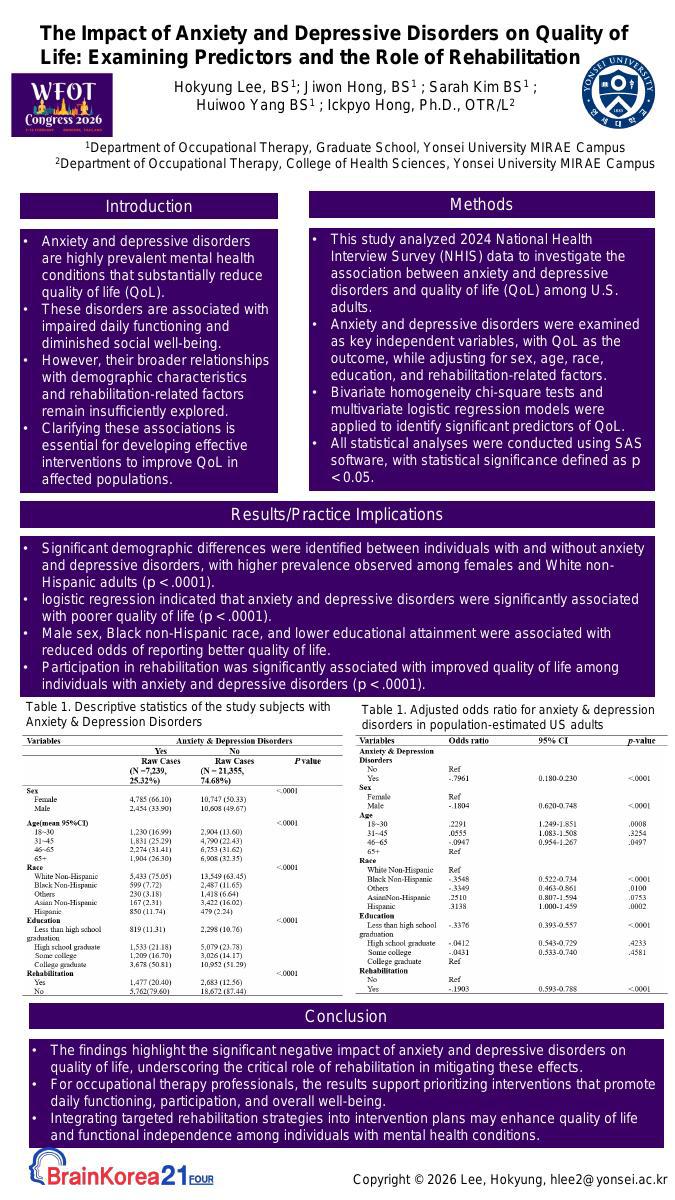
Results/Practice Implications: Significant differences in demographic characteristics were observed between individuals with and without anxiety and depressive disorders (P < .0001). A higher prevalence was found among females (66.10%) and White non-Hispanic individuals (75.05%). Logistic regression analysis showed that anxiety and depressive disorders negatively impacted quality of life (OR = -0.7961, P < .0001). Males, Black non-Hispanic individuals, and those with lower education levels had lower odds of reporting better quality of life. Rehabilitation was significantly associated with improved quality of life (OR = -0.1903, P < .0001).
Conclusion/Significance to the Occupational Therapy Profession: These findings underscore the impact of anxiety and depressive disorders on quality of life and emphasize the importance of rehabilitation. For occupational therapy professionals, this research suggests a focus on interventions that enhance daily functioning and overall well-being. Incorporating targeted rehabilitation strategies into treatment plans may support improved outcomes for individuals with mental disorders, ultimately fostering better quality of life and greater functional independence in everyday living.