
Introduction: Social isolation is a significant risk factor for dementia in later life, emphasizing the importance of preventive interventions.
Objectives: This study investigated whether activity engagement in 2021 impacted the social isolation of community-dwelling older adults in 2023.
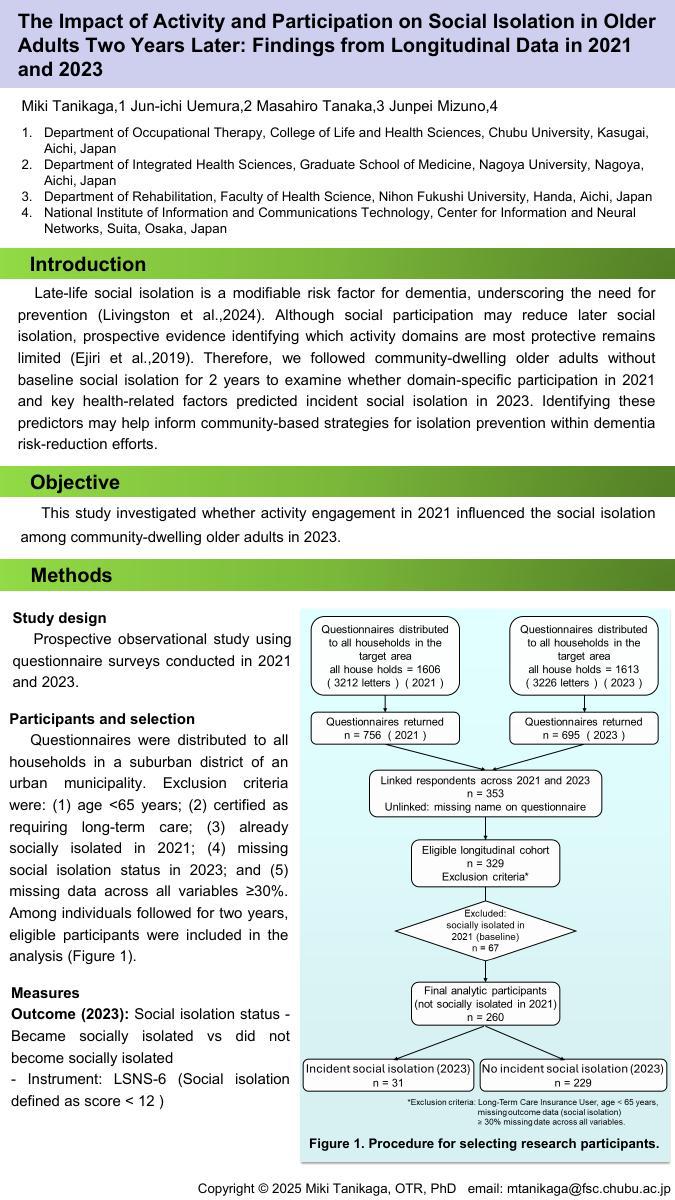
Methods: Questionnaires were distributed to all 1606 households in a suburban district in October 2021 and 2023, with 749 and 687 responses, respectively. Participants under 65 years old, those socially isolated in 2021, individuals with hospitalization history within the past year, long-term care insurance users, and cases with missing data were excluded. Social isolation was defined as a score below 12 on the Lubben Social Network Scale. Activity engagement rates were measured using the Activity Card Sort-Japan version across four domains: instrumental daily activities, low-intensity leisure, high-intensity leisure, and sociocultural activities. Covariates included age, sex, cohabitation status, physical function, subjective cognitive function, depression, and health-related quality of life in 2021. Binary logistic regression identified factors associated with social isolation in 2023, with significance set at p < 0.05. The study was approved by the institutional ethics committee, and consent was considered obtained upon questionnaire return.
Results: 356 responses were successfully linked (follow-up rate: 47.5%), and 218 participants were included in the analysis (median age: 78.3 years; 55.5% female). 26 individuals (11.9%) became socially isolated by 2023. Risk factors included being female (OR=0.319, p=0.011) and engagement rates in sociocultural activities in 2021 (OR=0.059, p=0.032). In other words, low engagement in sociocultural activities indicated increased social isolation two years later, especially among older men.
Conclusion: The results underscore the importance of promoting social participation, particularly among older men, to prevent social isolation.