
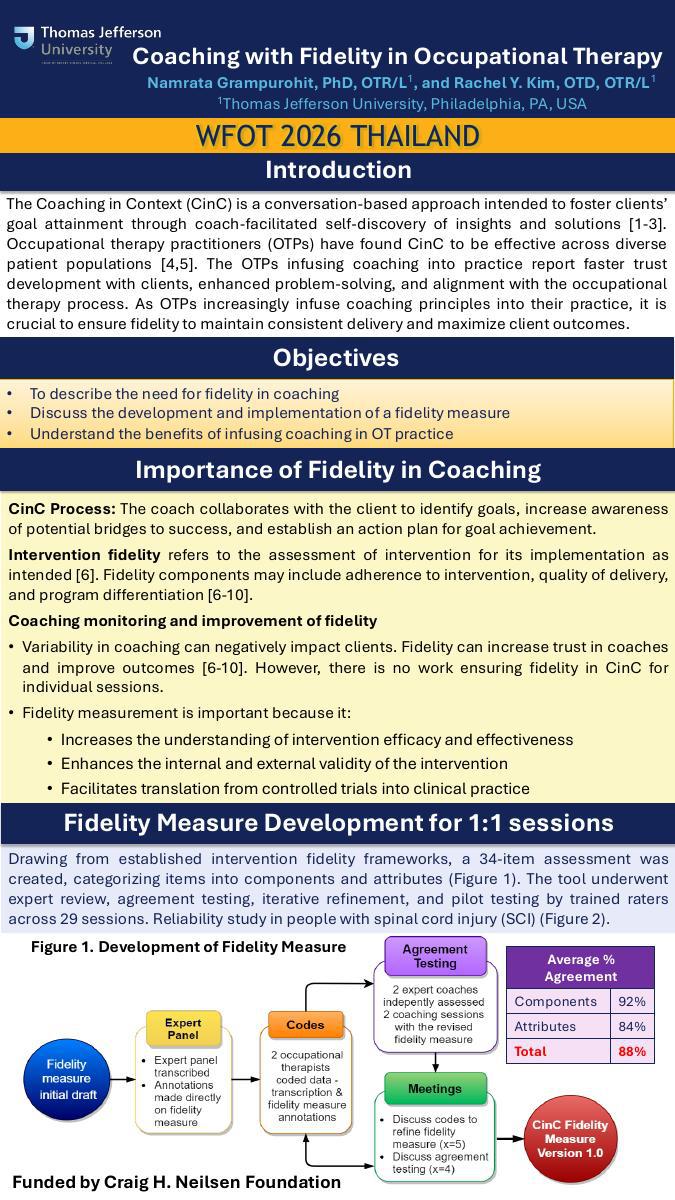
Introduction / Rationale: The Coaching-in-Context (CinC) model is a conversation-based approach intended to foster clients’ goal attainment through coach-facilitated self-discovery of insights and solutions. Occupational therapy practitioners (OTPs) have found CinC to be effective across diverse patient populations. OTPs who infuse coaching into practice report faster trust development with clients, enhanced client problem-solving, and alignment with the occupational therapy process. As OTPs increasingly infuse coaching principles into their practice, it is crucial to ensure fidelity to maintain consistent delivery and maximize client outcomes.
Objectives
- Understand the benefits of infusing coaching in OT practice
- Describe the need for fidelity in coaching
- Discuss the development and implementation of a fidelity measure
Methods / Approach: Drawing from established intervention fidelity frameworks, a 34-item assessment was created, categorizing items into components and attributes. The tool underwent expert review, agreement testing, iterative refinement, and pilot testing by trained raters across 29 coaching sessions.
Results / Practice Implications: Preliminary findings suggest the CinC fidelity measure provides valuable insight into whether the model is implemented as intended, highlighting areas to improve and maintain intervention integrity. These findings have broad implications for OT practice, ensuring that coaching is implemented reliably leading to reliable and effective outcomes.
Conclusion / Significance to the OT Profession: Infusing the CinC model into OT practice facilitates a client-driven approach with diverse populations. The development of the CinC fidelity measure underscores the importance of maintaining consistency in coaching practices to support client outcomes. Coaching with fidelity can help meet clients’ needs, advancing the profession’s ability to foster meaningful change.