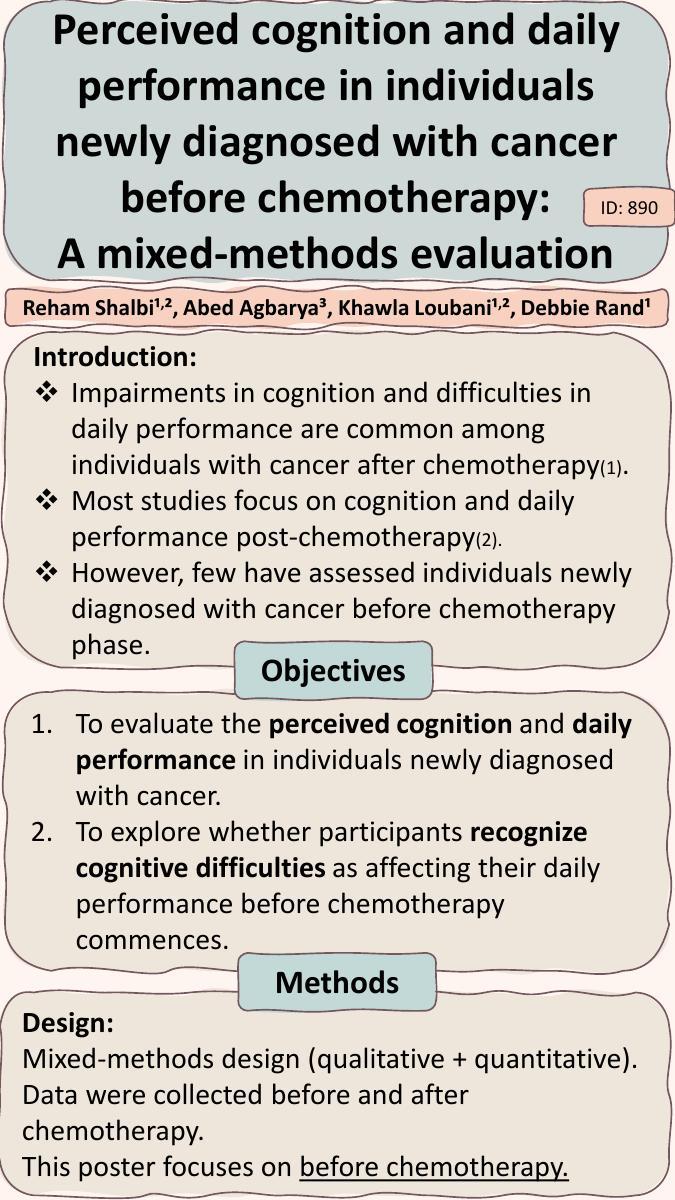
Introduction/Rationale: Impairments in cognition and difficulties in daily functioning are common among individuals with cancer following chemotherapy. While most studies focus on cognition and daily functioning post-chemotherapy, few have assessed individuals newly diagnosed with cancer before chemotherapy begins. Objectives: This study aims to: Evaluate perceived cognition and daily performance of individuals newly diagnosed with cancer. Explore whether participants recognize cognitive difficulties that may impact their daily performance before chemotherapy commences. Methods: Using a mixed-methods approach, we collected qualitative and quantitative data before-and after-chemotherapy. This presentation focuses on pre-chemotherapy findings. Participants included adults newly diagnosed with non-central nervous system malignancies (stages I-III). The Canadian Occupational Performance Measure-(COPM) was used to assess daily performance (3-5 goals per participant), while the Perceived Cognitive Impairment-(FACT-PCI) scale measured cognitive difficulties. Qualitative data were gathered through open-ended questions regarding cognitive impairments and their impact on daily performance. Results: In this ongoing study, 11 participants (8 women) aged 60±6.6 years have been included so far. Among the COPM goals, 74% related to instrumental daily activities, 48% to basic ADL, 37% to family relationships, and 30% to leisure activities. COPM's performance median score was 8.6 (IQR: 6.4-10) out of 10, with three participants (27%) reporting lower performance (<6/10). FACT-PCI's median score of 47 (IQR: 25.7-53.2) out of 72 suggests that cognitive difficulties were experienced 2-3 times per-week. Interestingly, most participants did not recognize cognitive difficulties as limiting their daily performance. Conclusions: These preliminary findings indicate that while some cognitive impairments are perceived pre-chemotherapy, daily performance remains largely preserved. However, participants’ lack of awareness regarding cognitive difficulties highlights the need for further assessments.
