
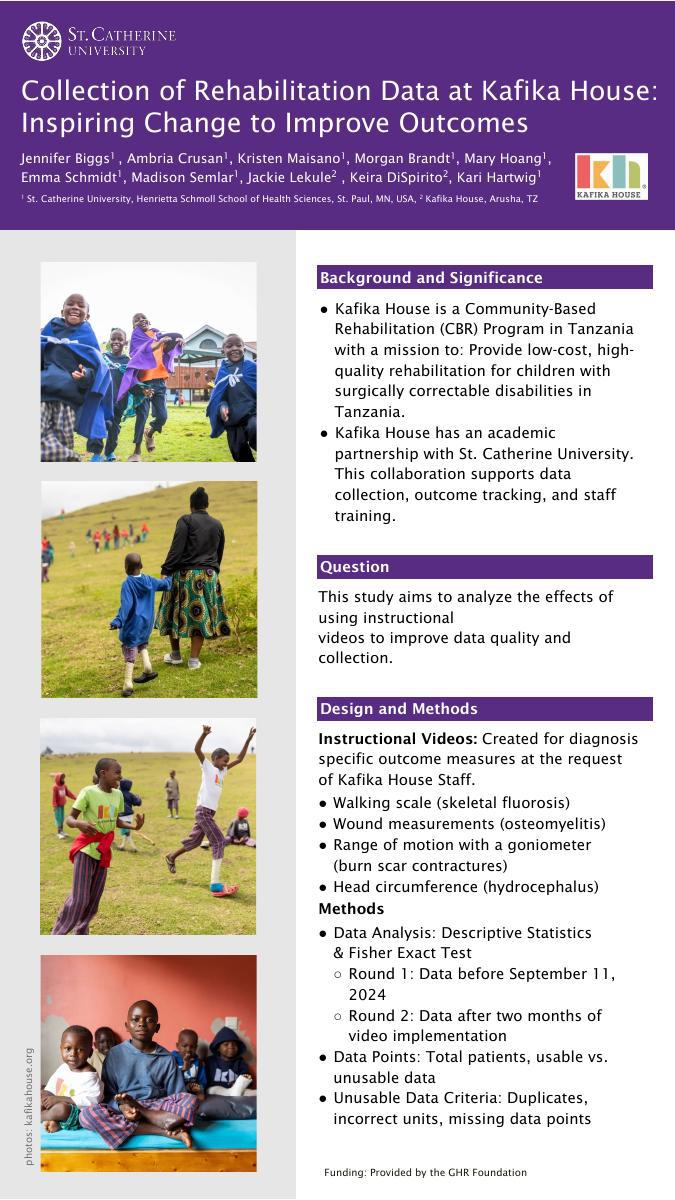
Introduction/Rationale: Kafika House is a community-based rehabilitation center in Arusha and Karatu, Tanzania that treats children with surgically treatable disabilities in order to transform their childhood experiences and innovate their future opportunities. In 2020, Kafika House and St. Catherine University entered an academic-community partnership to develop a plan for data collection to better measure patient outcomes at Kafika House. Such data can be used to promote quality improvement and demonstrate the impact of their programming. Despite collaborative decision-making on outcome measures, data collection documentation has been sporadic and inconsistent.
Objectives: This study aims to analyze the effects of using instructional videos to improve data quality and collection.
Methods/Approach: The research team developed instructional videos on outcome measure collection as requested by Kafika House staff. Patient outcome measure data was collected at baseline and after two months of video implementation.
Results/Practice Implications: Although the staff expressed satisfaction with instructional videos, and the data collection improved slightly, the results found no significant change in quantity or quality of data collection between rounds one and two for all outcomes. The findings highlight the variability in staff proficiency and comfort with specific outcome measures, suggesting a need for further training beyond video resources.
Conclusion/Significance to the Occupational Therapy Profession: Persistent challenges such as inconsistent personnel, resource limitations, and insufficient exposure, complicate effective data collection in community-based rehabilitation programs. Addressing these barriers through collaborative efforts and targeted training is essential for improving data reliability and fulfilling the mission of organizations like Kafika House.