
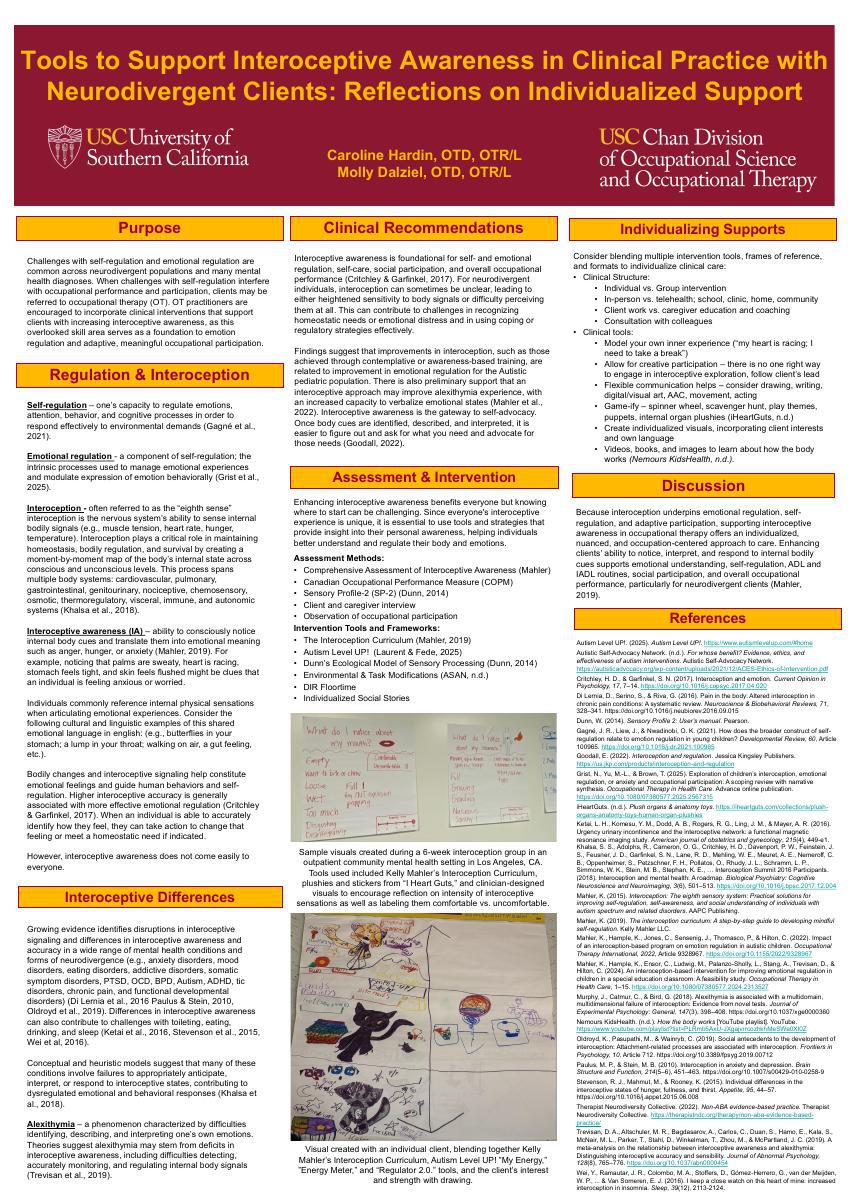
Introduction / Rationale: Interoception, our eighth sense, is the ability to notice internal sensations (e.g., tense muscles, growling stomach, racing heart) and translate them into emotional meaning, like anger, hunger, or anxiety. This skill, known as interoceptive awareness, is foundational for emotional regulation, self-care, social participation, and overall occupational performance.
Objectives: Participants will achieve three objectives following the presentation: (1) Define interoceptive awareness (IA); (2) Identify clinical resources that could be implemented in clinical practice to support IA; (3) Individualize the use of resources based on client need and setting.
Methods / Approach: Presenters will highlight an array of clinical resources that can be used to support IA (e.g., Kelly Mahler’s Interoception Curriculum, Autism Level Up Energy Framework, etc.) and resources they have developed in their own clinical practice. Presenters will review resources to conduct assessment and measure client outcomes.
Results / Practice Implications: Enhancing IA has impactful benefits, but knowing where to start can be challenging. Presenters will provide an array of examples of how to individualize use of interoception intervention tools in a variety of clinical settings and share results from their own clinical practice.
Conclusion / Significance to the Occupational Therapy Profession: IA is the gateway to self-advocacy—once body cues are identified, it becomes easier to recognize needs, ask for support, and advocate effectively for those needs. OT practitioners are well-positioned to support neurodivergent clients, particularly when equipped with supportive assessment and intervention tools.