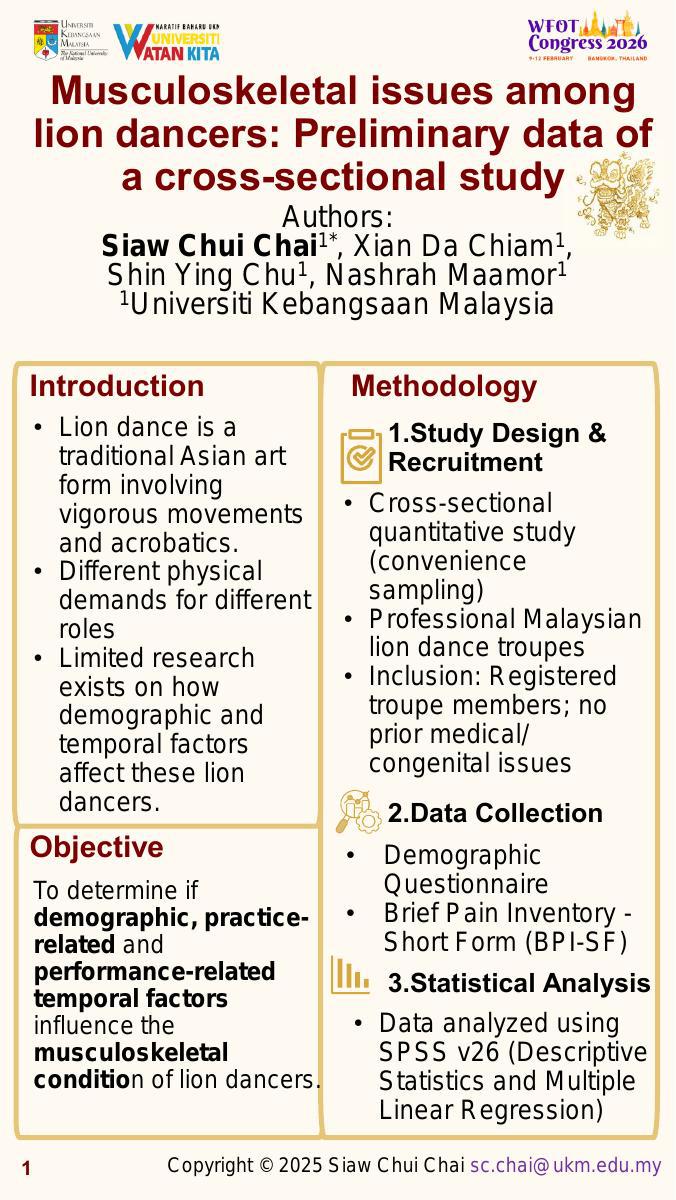
Introduction: Lion dance is a traditional Asian art form with significant cultural value in many communities worldwide. However, the physical demands of this practice, characterized by vigorous movements and acrobatics, may expose lion dancers to various musculoskeletal issues.
Objectives: To determine if demographic, practice-related and performance-related temporal factors influence the musculoskeletal condition of lion dancers.
Methods: This ongoing cross-sectional study recruits Malaysian participants registered under professional lion dance troupes via convenience sampling. Participants completed the Demographic Questionnaire and Brief Pain Inventory – Short Form.
Results: This preliminary analysis involved 50 participants (33 men and 17 women). The most common anatomical locations to suffer from pain were the trunk (60%), followed by the lower extremities (48%) and the upper extremities (28%). Age (B =0.133, p=0.038) and years of experience (B =0.145, p=0.031) significantly influence the pain severity of lion dancers. The frequency of practice (per week) significantly influenced the pain severity (B =0.982, p < 0.001) and the pain interference (B =0.531, p = 0.012).
Conclusion: Addressing the hazards causing musculoskeletal issues with targeted preventative measures, education, and regular health monitoring is necessary to preserve the health of lion dancers.
