
Introduction: Assessing symptoms and daily functioning in individuals with attention deficit hyperactivity disorder (ADHD) comorbid with major depressive disorder (MDD) is challenging because of their limited self-monitoring abilities.
Objectives: This study aimed to determine whether specific occupational behaviors could differentiate patients with ADHD comorbid with MDD from those with MDD alone.
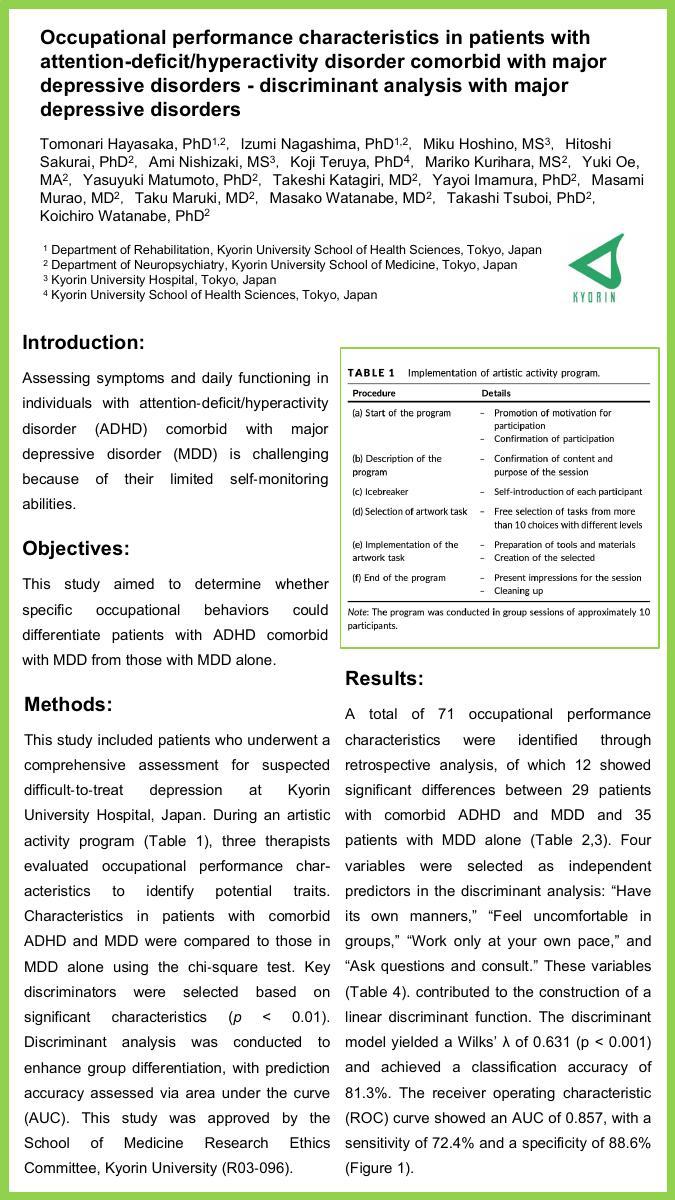
Methods: This study included patients who underwent a comprehensive assessment for suspected difficult-to-treat depression at Kyorin University Hospital, Japan. During an artistic activity program, three therapists evaluated occupational performance characteristics to identify potential traits. Characteristics in patients with comorbid ADHD and MDD were compared to those in MDD alone using the chi-square test. Key discriminators were selected based on significant characteristics (p<0.01). Discriminant analysis was conducted to enhance group differentiation, with prediction accuracy assessed via area under the curve (AUC). This study was approved by the Research Ethics Committee.
Results: A total of 72 occupational performance characteristics were identified, with 12 showing significant differences between 29 patients with comorbid ADHD and MDD and 35 with MDD. The independent variables in the discriminant analysis were "Have its own manners," "Feel uncomfortable in groups," "Work only at your own pace," and "Ask questions and consult." The analysis yielded a Wilks' λ of 0.631 (p < 0.001), with an accuracy rate of 81.3%. The receiver operating characteristic (ROC) curve had an AUC of 0.857, with a sensitivity of 72.4% and a specificity of 88.6%.
Conclusion: These findings highlight the role of occupational performance characteristics in differentiating comorbid ADHD and MDD from MDD alone. This approach may contribute to more tailored treatment strategies.