
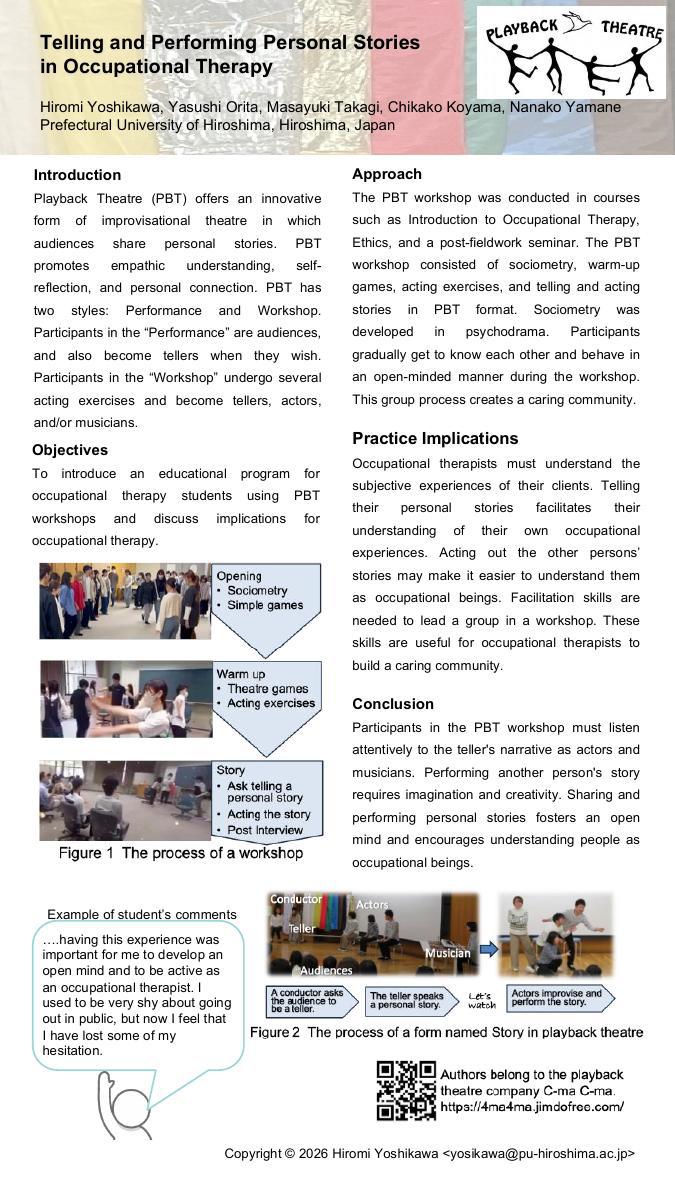
Introduction: Playback Theatre (PBT) offers an innovative form of improvisational theater in which audiences share personal stories. PBT promotes empathic understanding, self-reflection, and personal connection PBT has two styles: performance and workshop. Workshop participants become tellers, and performers such as actors and musicians, through several exercises.
Objectives: To introduce an educational program for occupational therapy students using PBT workshops and discuss implications for occupational therapy.
Approach: The PBT workshop was conducted in courses such as Introduction to Occupational Therapy, Ethics, and a post-fieldwork seminar. The PBT workshop consisted of sociometry, warm-up games, acting exercises, and telling and acting stories in PBT format. Sociometry was developed in psychodrama. Participants gradually get to know each other and behave in an open-minded manner during the workshop. This group process creates a caring community.
Practice Implications: Occupational therapists must understand the subjective experiences of their clients. Telling their personal stories facilitates their understanding of their own occupational experiences. Acting out the other persons’ stories may make it easier to understand them as occupational beings. Facilitation skills are needed to lead a group in a workshop. These skills are useful for occupational therapists to build a caring community.
Conclusion: PBT workshop participants, as actors and musicians, must listen carefully to the teller's story. Acting out the stories of others requires imagination and creativity. Telling and acting out personal stories fosters an open mind and understanding people as occupational beings.