
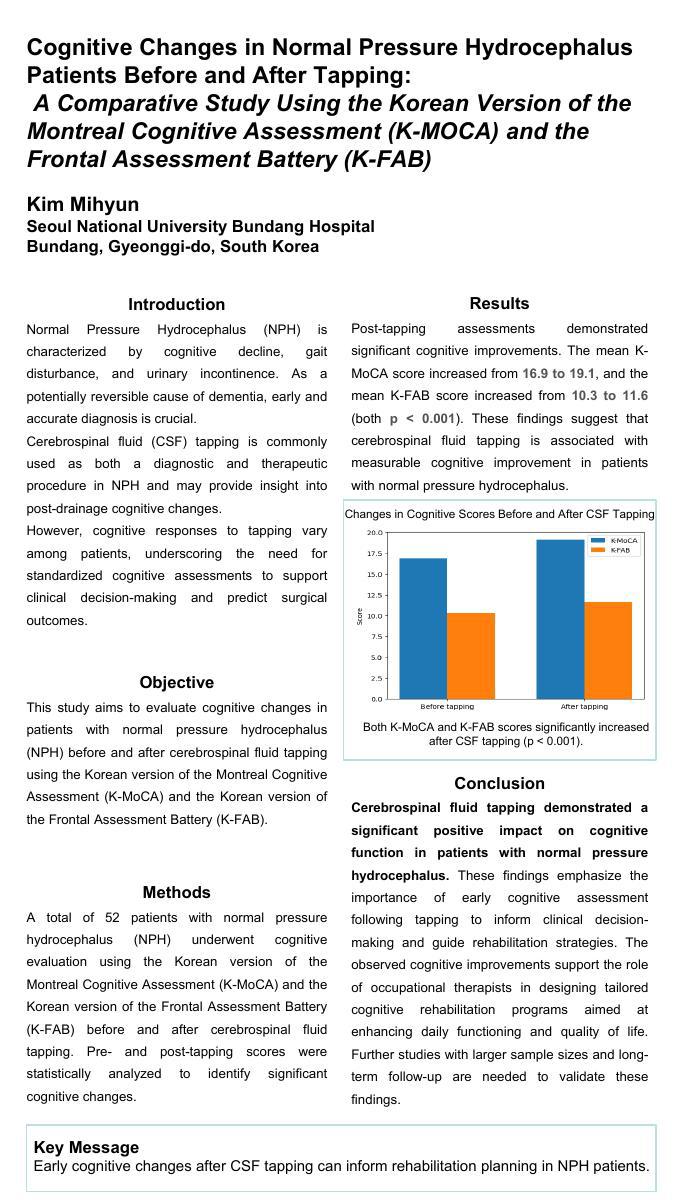
Introduction: Normal Pressure Hydrocephalus (NPH) is characterized by cognitive decline, gait disturbance, and urinary incontinence. As a potentially reversible cause of dementia, early and accurate diagnosis of NPH is crucial for effective intervention. Tapping, as both a diagnostic and therapeutic procedure, offers insight into cognitive improvements following cerebrospinal fluid (CSF) drainage. However, cognitive responses to tapping can vary among patients, highlighting the need for standardized assessment tools to predict surgical outcomes and optimize treatment strategies.
Objectives: This study aims to evaluate cognitive changes in NPH patients before and after tapping using the Korean version Montreal Cognitive Assessment (K-MoCA) and Korean version Frontal Assessment Battery (K-FAB).
Methods: A total of 52 NPH patients underwent cognitive evaluation using K-MoCA and K-FAB before and after CSF tapping. Pre- and post-tapping scores were statistically analyzed to determine significant cognitive changes.
Results: Post-tapping assessments revealed significant cognitive improvements. The mean K-MoCA score increased from 16.9 to 19.1, and the mean K-FAB score improved from 10.3 to 11.6 (P < 0.001 for both). These results highlight the potential cognitive benefits of CSF tapping in NPH patients.
Conclusion: Tapping demonstrates a significant positive impact on cognitive function in NPH patients, emphasizing its potential role in guiding rehabilitation strategies. These findings highlight the importance of early cognitive assessment and intervention following CSF tapping to maximize functional outcomes. Future studies with larger sample sizes and long-term follow-ups are essential to further validate these results. A deeper understanding of the cognitive benefits of tapping can support occupational therapists in designing tailored cognitive rehabilitation programs, ultimately enhancing the quality of life and daily functioning of NPH patients.