Introduction: We have no system of home-based neurorehabilitation in the Czech Republic. Our research focus was on finding a solution. Community occupational therapy (OT) is still not common practice. Health and social services become ineffective and the individual's return to normal life is disrupted.
Objectives: The primary objective of the research (grant No. GAJU 138/2016/S), was to map the coordinated rehabilitation of persons after acquired brain injury (ABI) within their social environment, aiming to help patients reclaim their lives despite functional limitations. The aim of the poster is to present evidence-based practice and to inspire other countries with unsolved areas of community practice.
Methods: ABI patients received three months of home-based coordinated rehabilitation, where physiotherapists, occupational therapists, and social workers participated. The development of the functional status and needs of the patients was monitored for 5 years. This longitudinal study was designed as mixed methods research in 17 case studies, including semi-structured interviews, OT home evaluation, FIM system®, WHODAS 2.0 questionnaire and telephone interviews.
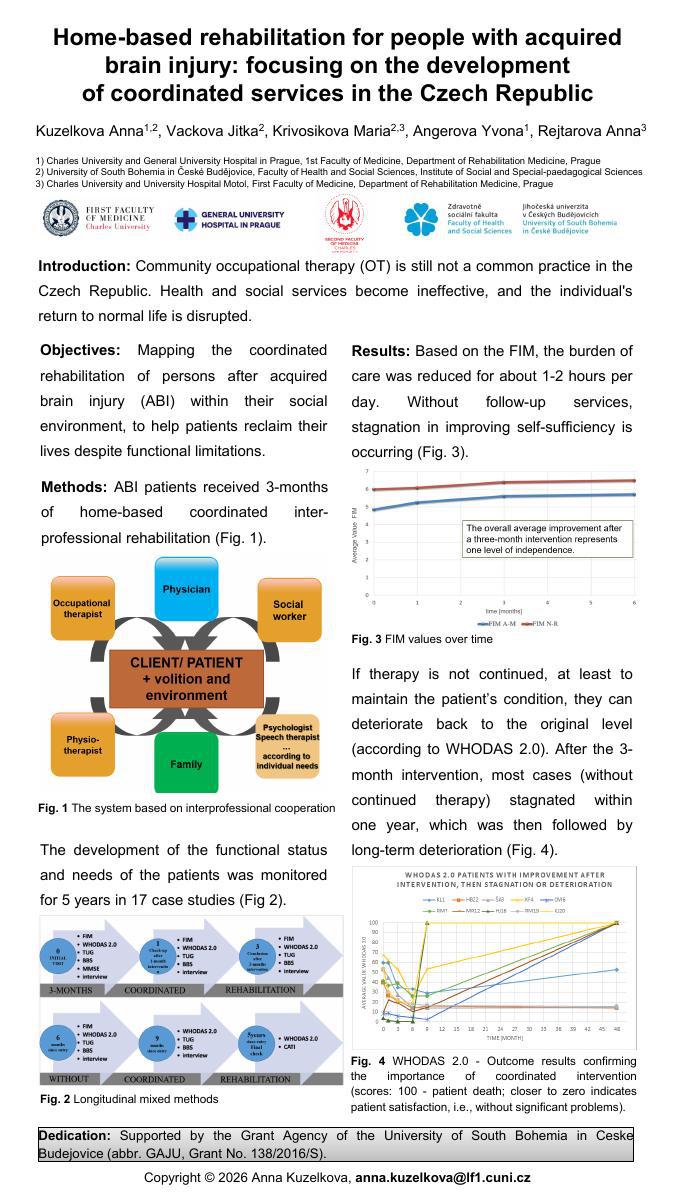
Results: Based on the FIM, the overall average improvement after a three-month intervention represents one level of independence, the burden of care was reduced for about 1-2 hours per day. Without follow-up services, the quality of life is deteriorating again, according to WHODAS 2.0.
Conclusion: Long-term continuity of rehabilitation is desirable for maintaining the effect. One of the most important OT areas focused on assistive technologies and barrier-free modifications, including professional assistance to the patient's family and close cooperation with social workers. As the main practical output ‘The methodology of occupational therapy in the home environment’ was developed.
