
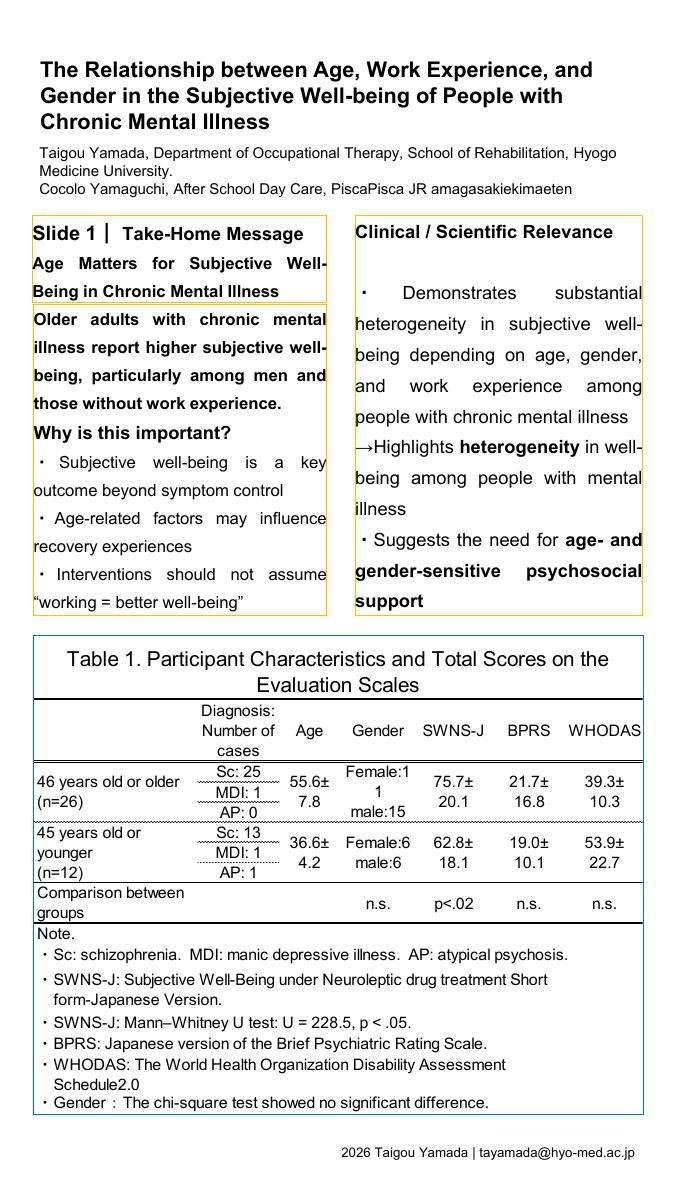
Objective: Previously, we reported that the subjective well-being of people with mental illness is lower for those who are working than for those who are not working, and that it is higher for older people than for adults. We conducted this study because little is known about the relationship between age, work experience, and gender in the subjective well-being of people with mental illness.
Method: Participants were clinically stable with diagnoses of schizophrenia, bipolar disorder, and atypical psychosis. There were 26 participants in the 46 and older group and 12 in the 45 and younger group. Subjective well-being was evaluated using the Japanese version of the Subjective Well-Being Under Antipsychotic Treatment Scale (SWNS-J). Differences between the two groups were analyzed using a t-test (Welch method).
Result: Subjective well-being scores were 75.7±20.0 for the 46 and older group and 62.8±25.3 for the 45 and younger group, with a significant difference between the two groups (p=.027). There was no difference in subjective well-being scores between the two groups for those with work experience, but there was a difference between the two groups for those without work experience (p=.017). There was also no difference in subjective well-being scores between the two groups for women, but there was a difference between the two groups for men (p=.026).
Conclusion: We conclude that our report can provide useful information for future research in the field of mental health, particularly for interventions to promote subjective well-being in people with mental illness.