
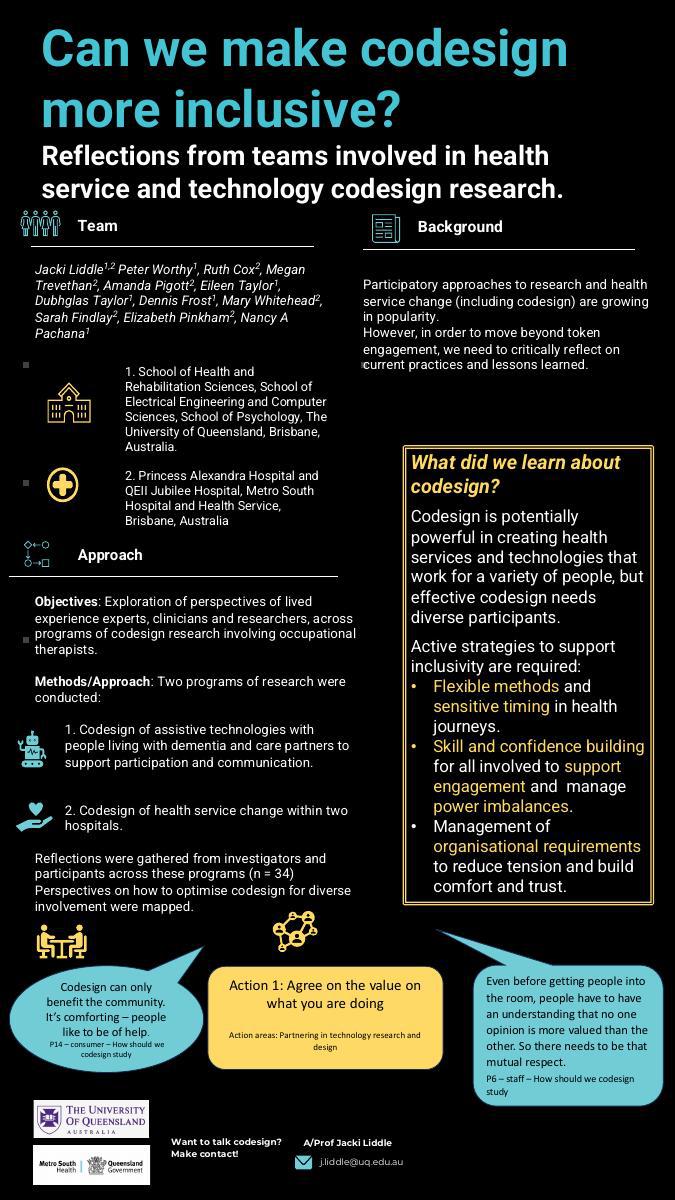
Introduction/Rationale: Participatory approaches to research and health service change (including codesign) are growing in popularity. However, in order to move beyond token engagement, we need to critically reflect on current practices and lessons learned.
Objectives: Exploration of perspectives of lived experience experts, clinicians and researchers, across programs of codesign research involving occupational therapists.
Methods/Approach: Two programs of research were conducted: 1. Codesign of assistive technologies with people living with dementia and care partners to support participation and communication. 2. Codesign of health service change within two hospitals. Reflections were gathered from investigators and participants across these programs (n = 34) about how to optimise codesign for diverse involvement.
Results/Practice Implications: Reflections indicated what was working well, current gaps in those who engage in codesign and participatory practices, and considering ways in which more inclusive engagement could be supported. A flexible, accessible and responsive codesign approach is warranted, involving investigators with lived experience. Recommendations included optimising timing of participation within health journeys, mutual skilling up and confidence building, and using multiple ways of engagement to ensure accessibility, management of power imbalances, and building comfort. Tensions between organisational requirements and stakeholder perspectives were noted, and barriers to inclusion were identified.
Conclusion / Contribution to the occupational therapy profession: To enable diverse engagement in codesign practices and research, partnering with stakeholders including lived experience experts is important. Carefully developing a flexible and inclusive process can support true collaboration. Recommended actions for inclusive codesign are provided.