
Introduction / Rationale: As robotics expand in healthcare, social robots like PARO hold promise for enhancing therapeutic engagement across diverse cultural settings. In Indonesia, introducing PARO in occupational therapy education is crucial to equip future practitioners with technologically relevant, culturally responsive competencies.
Objectives: This study examines the acceptance of PARO among Indonesian occupational therapy students, explores factors influencing adoption, and identifies strategies to embed culturally attuned technology within OT education.
Methods / Approach: A mixed-methods exploratory method is employed in this study. Students (n=210) engage with PARO in group-based learning activities as part of an Applied Technology in Occupational Therapy course. A validated questionnaire, modified from the Unified Theory of Acceptance and Use of Technology (UTAUT), will assess acceptance levels. A semi structured interview will be conducted to further explore students’ acceptance. Data collection will be completed in May 2025, followed by both quantitative and qualitative analysis.
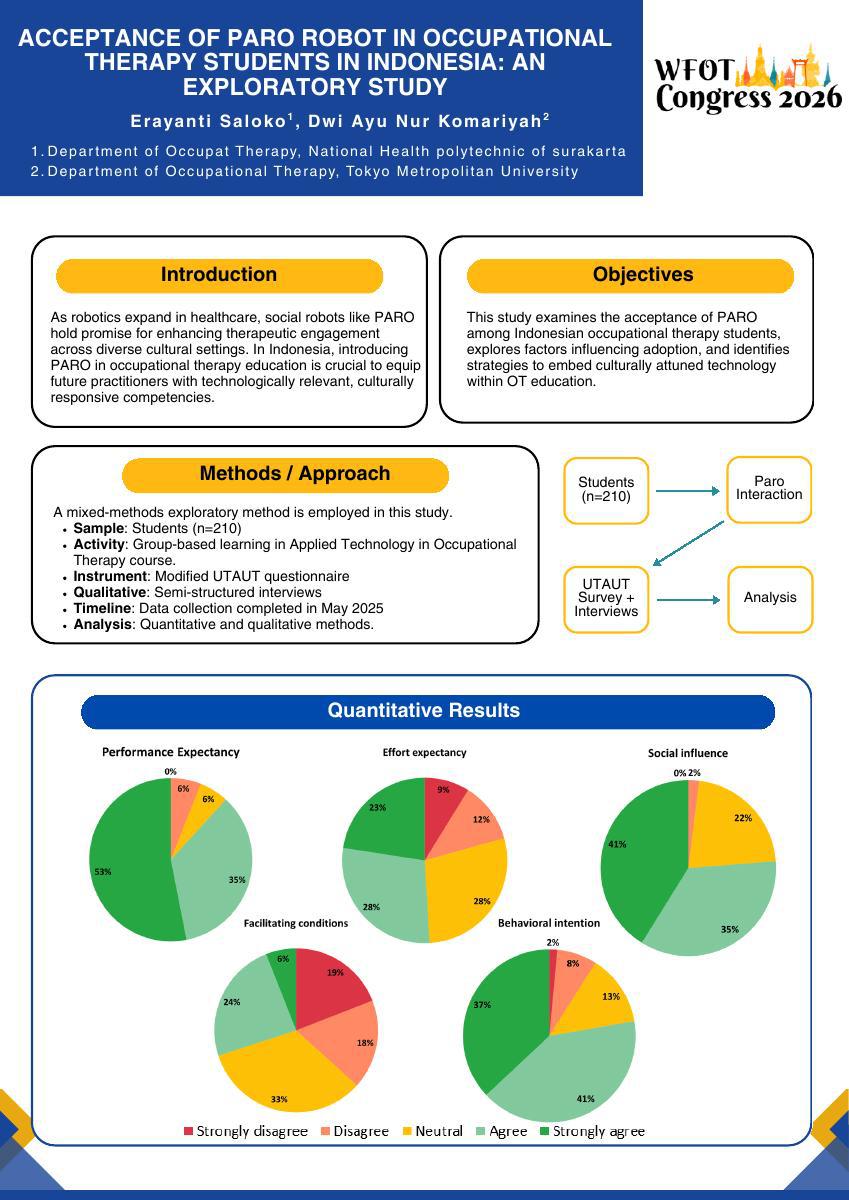
Results / Practice Implications: Preliminary data, available by early 2026, will reveal students’ acceptance levels, perceived benefits, and key cultural considerations influencing adoption. Attendees will learn about the practical factors shaping PARO’s educational impact, with insights guiding curriculum design and broader clinical applications. Findings may inform culturally responsive approaches to integrating technology, thereby enhancing student engagement and readiness for contemporary practice.
Conclusion / Significance to the Occupational Therapy Profession: By highlighting students’ acceptance of PARO, this study supports evidence-based, culturally oriented pedagogies. Its outcomes can inform global OT educators seeking to integrate emerging technologies, ultimately strengthening professional competence and improving client outcome