
Introduction / Rationale: College students actively use social media for various aspects such as academics, interpersonal relationships, and leisure. However, excessive use of social media can lead to addiction, resulting in negative outcomes like sleep deprivation, irregular lifestyle, and mental problems.
Objectives: This study aimed to investigate the effects of college students' social media usage time, access frequency, and addiction on their sleep quality.
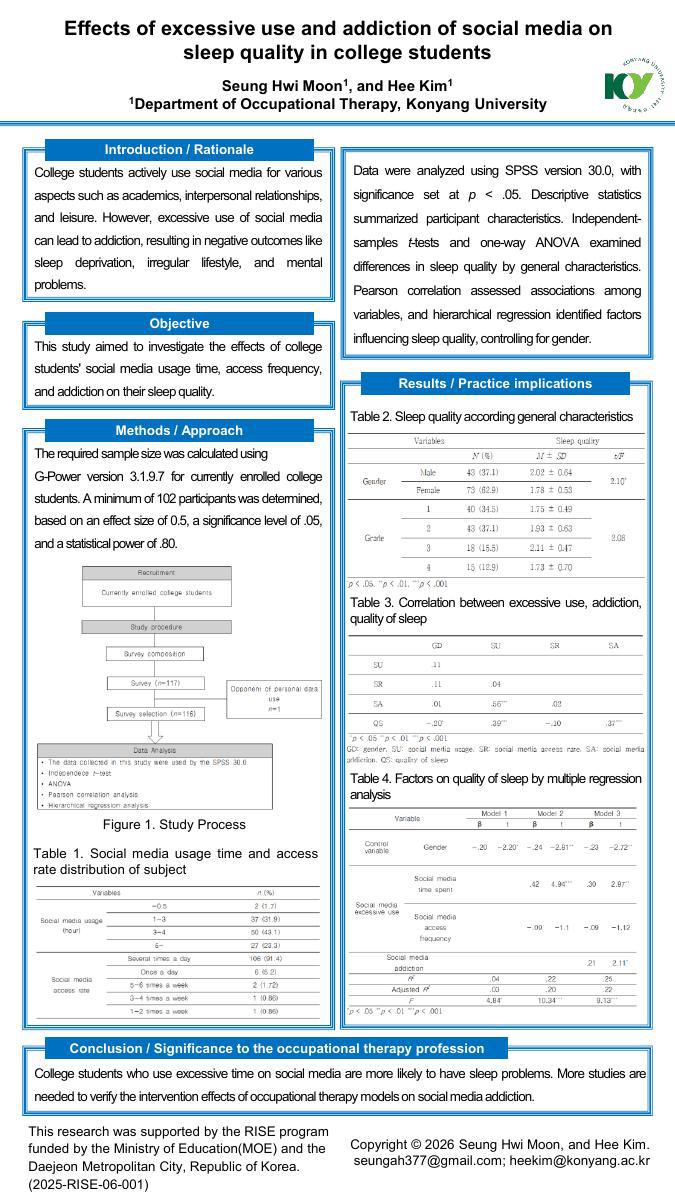
Methods / Approach: 116 college students answered an online questionnaire on the excessive use, access frequency and addiction of social media, and sleep quality. Independent sample t-test and one-way ANOVA were used to verify the difference in sleep quality according to general characteristics. Correlations between general characteristics, excessive use of social media, social media addiction, and sleep quality were analyzed using Pearson correlation analysis. Effects of general characteristics, excessive use and addiction of social media on sleep quality were analyzed using hierarchical regression analysis.
Results / Practice Implications: Results of the sleep quality according to general characteristics showed the sleep quality was significantly lower in males. The social media usage time showed a positive correlation with sleep quality, and gender showed a negative correlation. The hierarchical regression analysis results showed the social media usage time had a significant positive effect on sleep quality, and gender had a significant negative effect on sleep quality.
Conclusion / Significance to the Occupational Therapy profession: College students who use excessive time on social media are more likely to have sleep problems. More studies are needed to verify the intervention effects of occupational therapy models on social media addiction.