
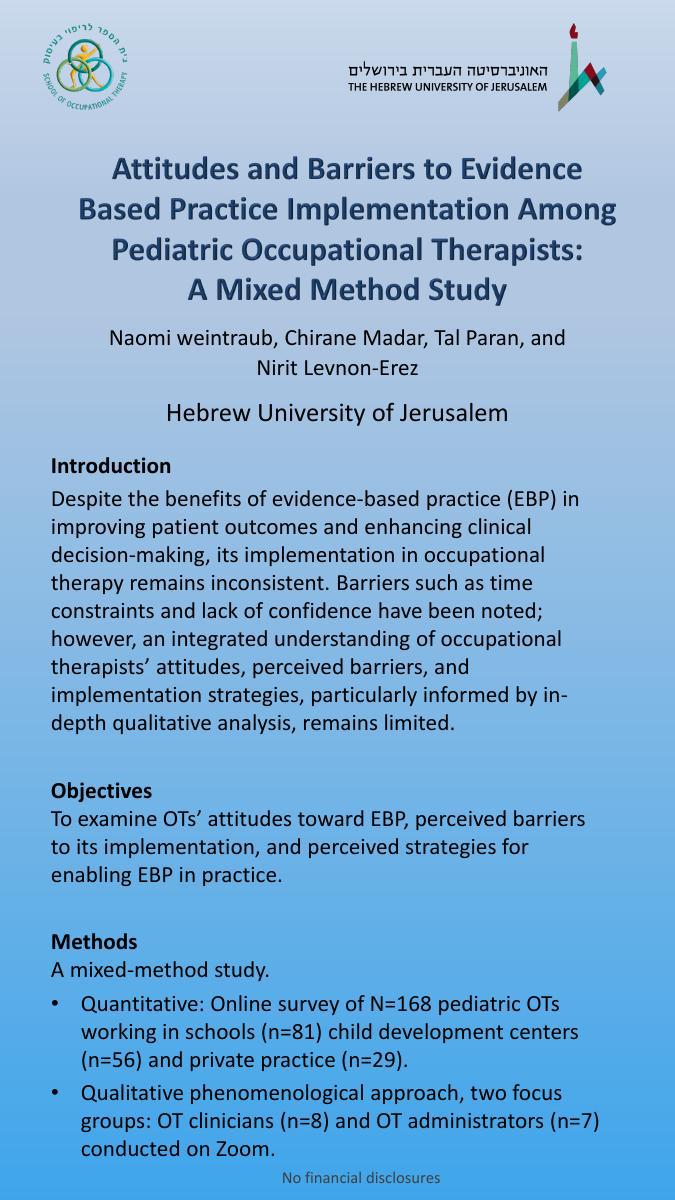
Introduction / Rationale: Despite the benefits of evidence-based practice (EBP) in improving patient outcomes and strengthening occupational therapists’ (OTs’) professional identity, its implementation in occupational therapy remains inconsistent. Barriers in implementing EBP such as time constraints and lack of confidence have been noted, yet the knowledge concerning OTs’ perspectives on EBP is scarce.
Objectives: To examine OTs’ attitudes toward EBD, and their perspective relating to barriers and possible enablers to EBP implementation.
Methods / Approach: A mixed method study was performed. Quantitative data were collected via an online survey of 168 pediatric OTs, working in schools and child development centers. The qualitative part followed a phenomenological approach, and include two focus groups (OT clinicians and OT administrators), conducted via “ZOOM”.
Results / Practice Implications: The survey and focus groups’ findings showed that the OTs held positive attitudes towards EBP and acknowledged its importance. Alongside, they identified barriers to implementation, which were linked to their workplace (limited time, resources, and management support), personal factors (lack of EBP knowledge and motivation to change), and insufficient evidence in their area of intervention.
Conclusion / Significance to the Occupational Therapy Profession: There is a gap between pediatric OTs’ positive attitudes toward EBP and its implementation. The identified barriers suggest the need for organizations (work settings) to allocate time and resources, and deteradopt a policy that promotes EBP implementation, alongside developing educational programs to enhance OTs' knowledge and skills in applying EBP.