
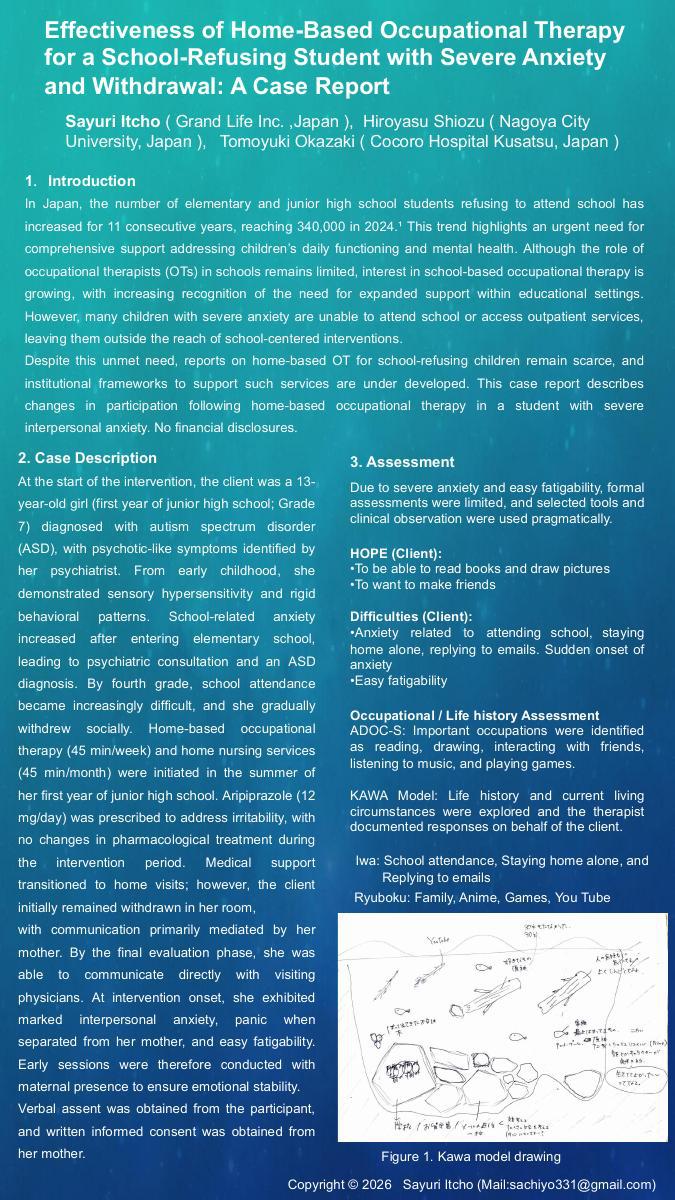
Rationale: In Japan, the number of school-refusing children has been increasing for 11 consecutive years, reaching 346,000 in 2024. This trend highlights the urgent need for effective support to improve children's well-being. While school-based therapeutic interventions are essential, there is a critical demand for tailored support for those who cannot attend school or leave their homes. This case report investigates the effectiveness of home-based occupational therapy for a student who, despite significant anxiety, increased social connections and chose to enroll in a correspondence high school.
Objectives: To explore the efficacy of home-based occupational therapy in supporting school-refusing children with anxiety, focusing on individual case outcomes.
Methods: This case report monitored a 13-year-old female student with autism spectrum disorder and schizophrenia, who exhibited severe anxiety and social withdrawal. Interventions included building a therapeutic relationship, enhancing self-esteem through cognitive-behavioral techniques, and engaging in activities that promoted social interaction over 24 months. Data collection involved subjective assessments, the KAWA model, the Functional Independence Measure (FIM), and vital sign evaluations.
Results: Results indicated notable improvements in the child's ability to manage anxiety, engage in social interactions, and express personal aspirations. The approach facilitated the establishment of realistic goals, encouraging the child to gradually increase participation in home and community activities.
Conclusion: This case underscores the potential of home-based occupational therapy to facilitate meaningful engagement and self-efficacy in children facing severe anxiety. It highlights the need for tailored interventions that empower children to set and pursue their goals, emphasizing the role of occupational therapy in developmental empowerment.