
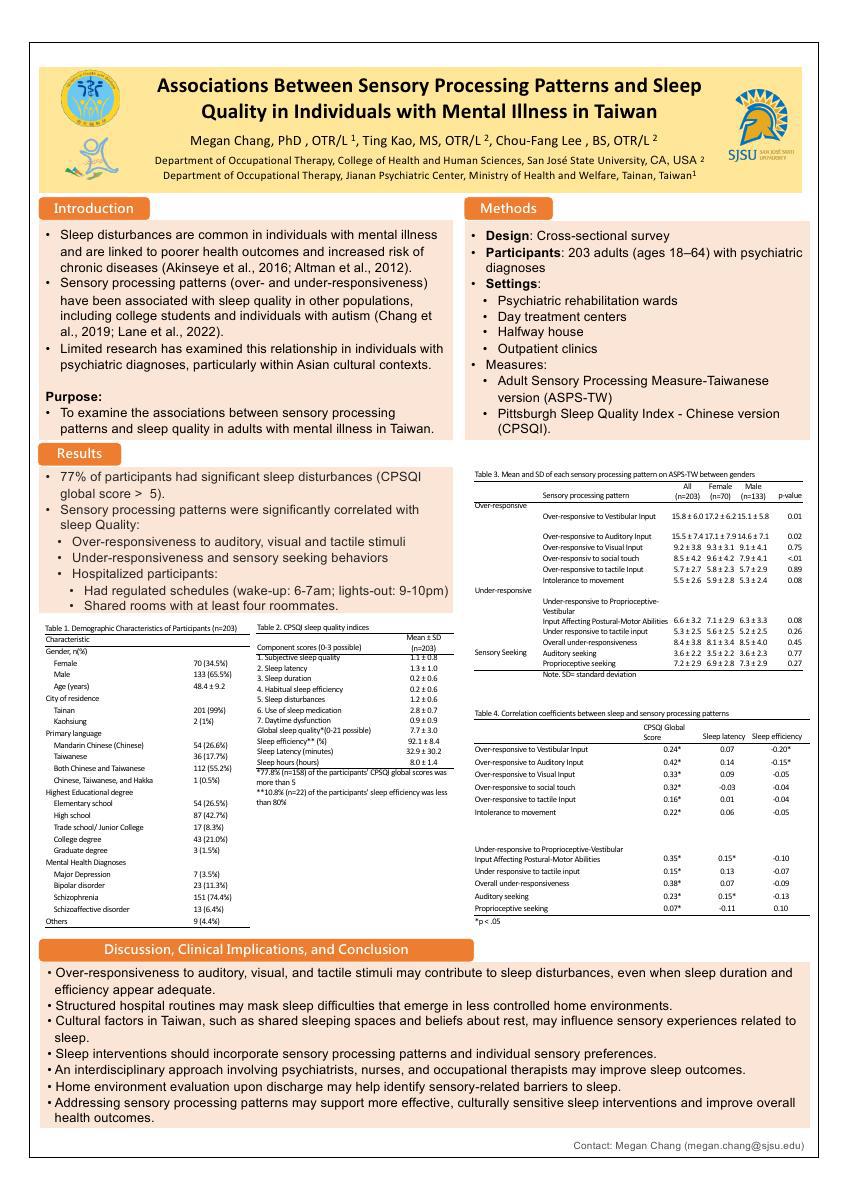
Introduction: Previous research has explored the relationship between sensory processing patterns and sleep quality in various populations, such as college students and individuals with autism, but less is known about this connection in individuals with mental health diagnoses. Sensory processing issues may contribute to poor sleep, potentially affecting overall health and increasing the risk of conditions like heart disease, stroke, and diabetes.
Objective: This study aimed to examine the associations between sensory processing patterns and sleep disturbances in individuals diagnosed with psychiatric disorders in Taiwan.
Methods: A cross-sectional survey was conducted with 203 adults aged 18-64 from psychiatric rehabilitation wards, day treatment centers, halfway houses, and outpatient clinics in southern Taiwan. Participants completed the Adult Sensory Processing Measure-Taiwanese version (ASPS-TW) and the Pittsburgh Sleep Quality Index – Chinese version (CPSQI).
Results showed that 77% of participants had significant sleep disturbances, as indicated by CPSQI global scores above 5. Sensory processing factors, such as over-responsiveness to auditory, visual, and tactile stimuli, as well as under-responsiveness and sensory seeking, were significantly correlated with sleep quality. All hospitalized participants had regulated sleep schedules, with wake-up times between 6:00-7:00 AM and lights-out by 9:00-10:00 PM.
These findings suggest that sensory processing patterns should be considered when addressing sleep issues in individuals with mental health disorders. An interdisciplinary approach involving psychiatrists, nurses, and occupational therapists could improve sleep outcomes, and evaluating the home environment upon discharge may offer additional insights into improving sleep quality. Cultural factors, such as traditional sleep practices and beliefs about rest in Taiwan, may also influence the sleep environment, and these should be considered when developing culturally sensitive sleep interventions.