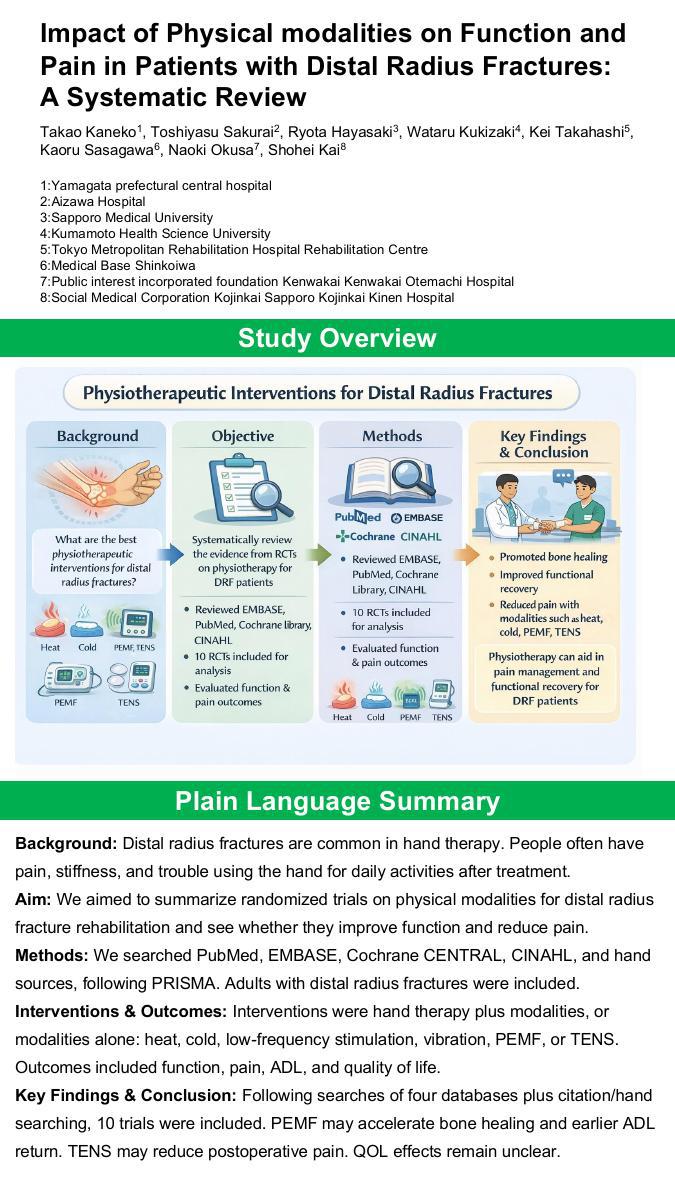
Objective: In the field of hand therapy, distal radius fracture (DRF) is one of the most frequently encountered. This systematic review aimed to comprehensively summarize the existing reports on physiotherapeutic interventions for patients with DRF and to examine their effects on function and pain in these patients based on evidence obtained from randomized controlled trials.
Methods: This systematic review was conducted and reported in accordance with the Preferred Reporting Items for Systematic Reviews and Meta-Analyses guidelines. Searches were performed using EMBASE, PubMed, The Cochrane Central Register of Controlled Trials, the Cumulative Index to Nursing and Allied Health Literature, and hand search. The study population consisted of adults diagnosed with distal DRF. The intervention involved hand therapy combined with physical modalities or physical modalities alone, including modalities such as heat therapy, cold therapy, low-frequency therapy, or vibrational stimulation. The control group received standard hand therapy only. The outcomes measured included functional evaluations, pain assessments, and subjective scores such as ADL and Quality of Life (QOL).
Results: Of the 4,225 records identified, ten were included. ten eligible studies used various physiotherapeutic interventions. Pulsed electromagnetic field therapy demonstrated efficacy in promoting bone healing, facilitating earlier cast removal, and enabling a quicker return to ADL. Transcutaneous electrical nerve stimulation proved effective in alleviating postoperative pain.
Conclusion: This systematic review has revealed the potential benefits of various physiotherapeutic interventions for DRF. These therapies have been suggested to improve pain, functional recovery, range of motion, and bone healing. While these findings are promising, a key challenge remains in linking these outcomes to improvements in QOL to strengthen the evidence base and guide clinical practice for optimal rehabilitation strategies.
