
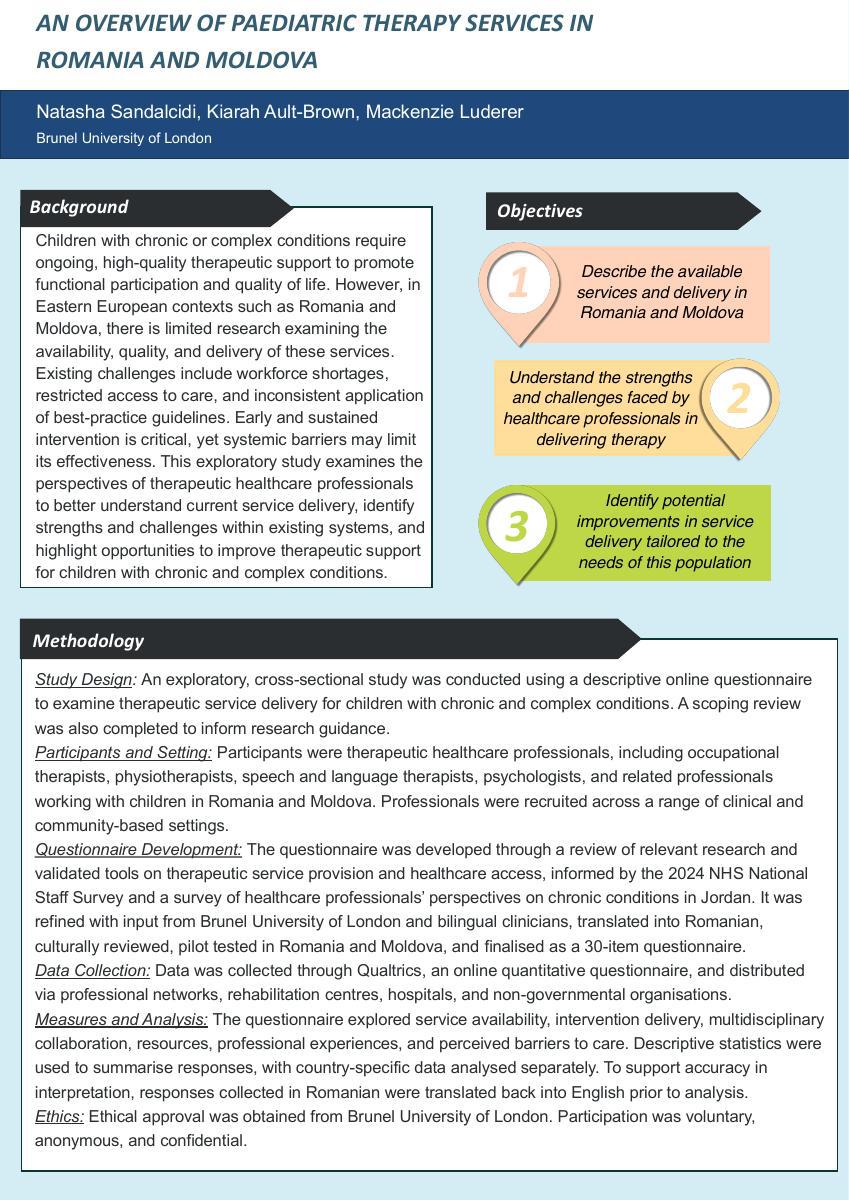
Introduction / Rationale: Romania and Moldova are neighbouring ex-communist countries in South Eastern Europe, sharing a common language and history. Significant efforts to improve the quality of paediatric therapeutic services have been documented in WHO and UNICEF reports. However, there is a paucity of research focusing on the perspectives of therapy service providers which makes it difficult to assert and prioritise the specific needs for service improvement.
Objectives:This project aims to provide an overview of the current service provision in Romania and Moldova by investigating therapists’ views on the quality and availability of therapeutic services for children with complex and rare conditions in Romania.
Methods / Approach: A Qualtrics survey consisting of 30 questions was distributed in Romanian language in February 2025 to therapists working with children in Romania and Moldova. Data was collected between February- April 2025 and was analysed using descriptive statistics in SPSS.
Results / Practice Implications: Preliminary data (n=71) collected to date (February 2025) highlights a range of professionals working in therapeutic service in both countries, the highest proportion being physiotherapists (29%), followed by occupational therapists (12%), and speech and language pathologists (8%). 60% had a master or PhD. The predominant approach was working 1:1 (80%), with a focus on gross and fine motor abilities. The key influencing factors in choosing the intervention was the child’s development and diagnosis. The highest identified need for providing high quality interventions was related to training in diagnostic specific interventions (76%) and access to up to date research (64%).
Conclusion / Contribution to the occupational therapy profession: Therapists might benefit from accessing current research to guide selection of evidence based interventions to promote participation.Further qualitative research to understand current practice is needed.