
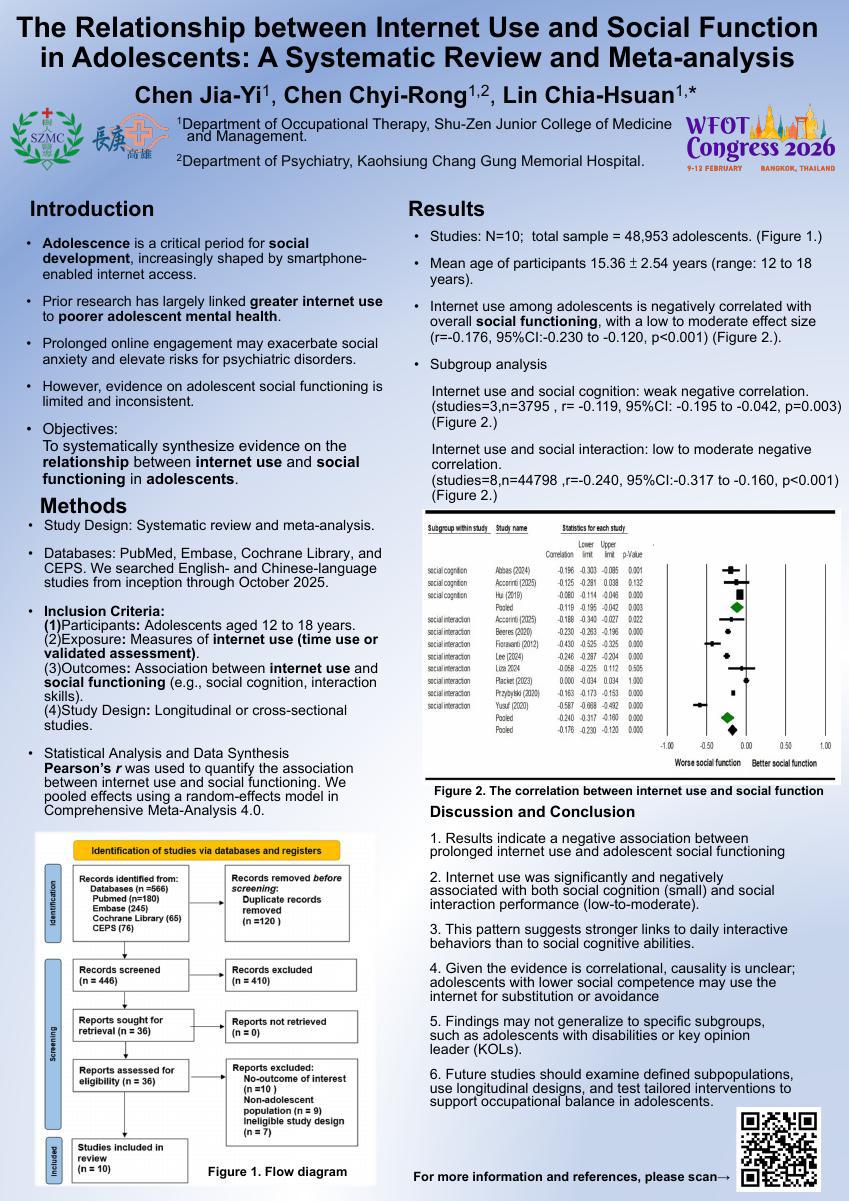
Introduction: Existing literature suggests a potential association between intensive internet use and poor mental health outcomes in adolescents. However, its relationship with adolescents' social interaction functioning remains inconclusive.
Objectives: The aim of this study is to systematically synthesize existing evidence on the relationship between internet use and social functioning in adolescents.
Methods: This study is a systematic review and meta-analysis. Literature will be searched in PubMed, Embase, Cochrane Library, and CEPS. Phase one will focus on studies published before January 2025, and phase two will include studies published before October 2025. Eligible studies will be cross-sectional or longitudinal, exploring the relationship between adolescent internet use and social functioning (e.g., social cognition, interaction performance). Effect sizes will be calculated using Pearson's r, with subgroup analysis based on social functioning aspects.
Results: Preliminary analysis indicates that the duration of internet use among adolescents is negatively correlated with overall social functioning, with a low to moderate effect size (n = 42,485, r = -0.197, p = 0.001). Subgroup analysis shows a low negative correlation between internet use and social cognition (n = 3,348, r = -0.080, p < 0.001). It also shows a moderate to low negative correlation with social interaction performance(n = 39,137, r = -0.250, p = 0.004).
Conclusion: Preliminary results highlight the negative association between prolonged internet use and the development of social functioning in adolescents. Future research should continue to explore the long-term effects and investigate appropriate intervention strategies.